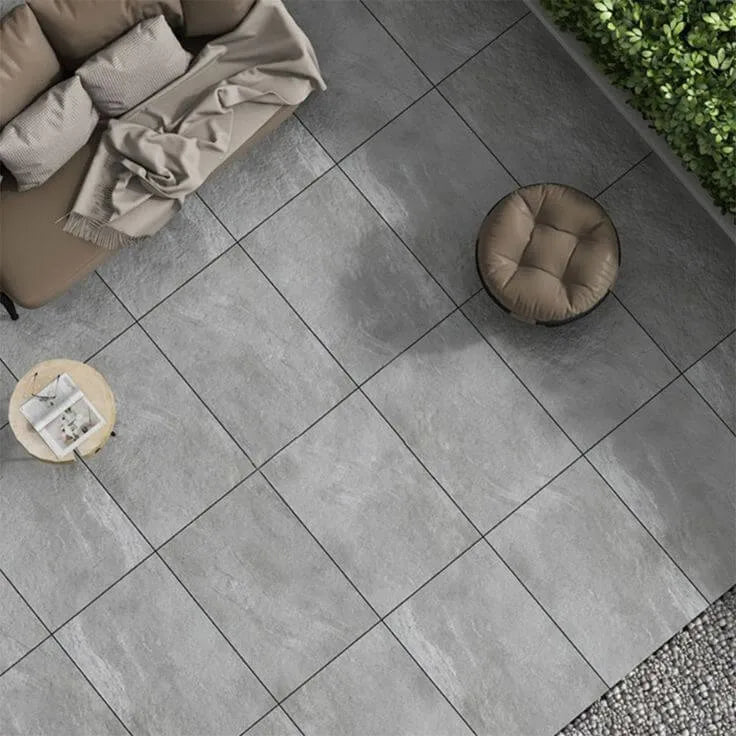
London Grey Porcelain Paving Slabs 900x600x20 MM (21.6 SQM, 40 Slabs Per Pack) From £24.50/m2
London Grey Porcelain Paving Slabs 900x600x20 MM (21.6 SQM, 40 Slabs Per Pack) From £24.50/m2
Couldn't load pickup availability
London Grey Porcelain Paving Slabs 900x600x20 MM
Add timeless architectural style to your outdoor space with premium London Grey Porcelain Paving Slabs 900x600x20mm (SKU: PS-LONDON_GREY-90-60). Distributed by Paving and Slabs Ltd, this sophisticated selection features a cool contemporary grey stone-effect finish that delivers a clean, modern appearance while maintaining ultimate structural excellence. The large-format 900x600mm configuration minimizes joint lines to create an expansive, seamless visual flow across contemporary gardens, urban courtyards, and patio spaces.
Manufactured using advanced vitrified porcelain technology, these heavy-duty 20mm calibrated paving flags offer exceptional material density. The non-porous matrix completely repels moisture ingress, protecting your external living spaces from winter frost-spalling, green algae development, and staining through the UK's demanding weather seasons without requiring surface chemical sealers.
London Grey Performance Highlights
- Product SKU: PS-LONDON_GREY-90-60
- R11 Slip Resistance: High-friction textured surface safe for wet UK weather conditions.
- Contemporary Finish: Cool neutral mid-to-cool grey tone with complete color-fast stability.
- Vitrified Core Matrix: Near-zero water absorption blocks winter freeze-thaw damage.
- Low Maintenance: Non-porous build stops moss accumulation and deep-set staining.
Modern Grey Porcelain for Contemporary Landscapes
Grey paving serves as an essential design staple for modern British gardens due to its striking versatility. London Grey Porcelain coordinates effortlessly with diverse external textures including crisp rendered walls, timber fencing, glass balustrades, and structured architectural planting. When paired with modern outdoor seating and minimalist design elements, these flags build a fluid bridge between internal domestic living areas and outdoor entertainment zones.
For project orders requiring uniform batching across several pallet deliveries, please note minor shade variances can occur between separate manufacturing runs. If you need consistency matching an existing order batch code, please reach out to our team before securing your purchase.
Planning your landscaping budget? Explore our detailed cost references covering the true cost of paving a patio in the UK, or review our design selection guide on the best paving slabs for patios and gardens to align your styling goals with your budget limits.
Creative Design Pairings & Tonal Contrasts
The neutral canvas of London Grey allows for incredible flexibility when matching alternative paving lines from our catalog:
- High-Contrast Borders: Frame your grey field using striking lines from our Anthracite Dark Paving Slabs selection.
- Multi-Tonal Stone Grading: Integrate natural variations across connecting garden paths using Kandla Grey Paving Slabs.
- Bright Modern Contrast: Create light-reflecting open zones by contrasting with Quartz White Paving Slabs.
Browse our main options via our Porcelain Paving Collection and Patio Slabs categories, or explore traditional options inside our Indian Sandstone collection.
Professional Installation Guidelines
To ensure a permanent, stable layout, London Grey flags must be installed over a compacted MOT Type 1 sub-base set into a full continuous wet mortar bed. Never use spot-bedding or 'dot-and-dab' installation methods; missing continuous cement backing leaves structural voids that crack easily under heavy loads. Because dense vitrified porcelain cannot absorb water from normal mortar mixes, a high-performance porcelain slurry primer must be brushed onto the reverse side of every slab right before placement. Read more within our breakdown on why slurry primer SBR matters when laying outdoor porcelain slabs.
Maintain uniform 3 to 5mm joint spaces alongside a minimum 1 in 80 drainage fall directing water away from property foundations. Routine care involves simple sweeping and occasional washing; learn detailed upkeep strategies in our guide on how to clean and maintain paving slabs.
Regional UK Supply & Direct Delivery
We supply premium porcelain paving tiles directly to homeowners, landscapers, and contractors nationwide. Discover regional fulfillment options near you:
- Sourcing vitrified paving in Cornwall? Look into porcelain paving in St Austell.
- Planning a courtyard update in Buckinghamshire? Check porcelain paving in Milton Keynes.
- Designing an outdoor deck in Devon? View porcelain paving in Torquay.
- Laying a terrace space in Lancashire? Explore porcelain paving in Southport.
- Upgrading a modern garden project in Greater Manchester? See porcelain paving in Manchester.
Technical Specifications
| Product SKU / Code | PS-LONDON_GREY-90-60 |
| Product Format | Large-Format Rectilinear Paving Flag |
| Nominal Size | 900mm x 600mm |
| Depth Calibration | 20mm External Grade Heavy-Duty |
| Slip Rating | Certified R11 Anti-Slip Surface |
| Material Composition | Vitrified Stoneware Matrix (Neutral Mid-to-Cool Grey) |
Frequently Asked Questions
Are London Grey Porcelain Paving Slabs suitable for UK weather?
Yes. Manufactured from dense vitrified porcelain with near-zero water absorption, London Grey resists frost damage and seasonal moisture ingress entirely.
Do London Grey Porcelain slabs require sealing?
No. Vitrified porcelain is non-porous and naturally resistant to moisture, staining, and algae growth without requiring sealer coatings.
Can London Grey Porcelain slabs be laid on sand and cement?
No. Porcelain must be installed on a full continuous mortar bed accompanied by a porcelain slurry primer applied to the slab backing.
Are London Grey Porcelain slabs slippery when wet?
No. These slabs feature an R11 slip-resistance rating, providing dependable underfoot traction during wet UK weather.
Share