Edging Planks and Setts UK: Stone Border Edging for Patios, Paths & Driveways
Edging planks and setts are the critical finishing detail that elevates a paved area from average to professional grade. At Paving and Slabs Ltd, our comprehensive range of stone border edging planks and setts is specified by landscapers, civil contractors, and homeowners across the UK to construct crisp, stable, and resilient perimeters that maintain structural integrity and visual appeal.
Whether you require linear edging for a modern outdoor porcelain surface or heavy-duty granite setts for a driveway perimeter, we stock solutions tailored to your design requirements. Every product in our collection is batch-calibrated for dimensional accuracy, structural strength, and long-term resistance to harsh UK weather conditions.
Completing a full landscaping build? Pair your perimeter borders with our composite decking boards or privacy composite fencing panel kits for seamless ground-level transitions.
What Are Edging Planks?
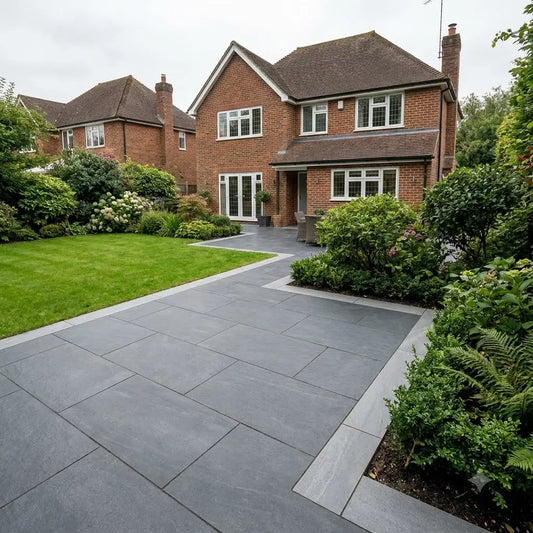
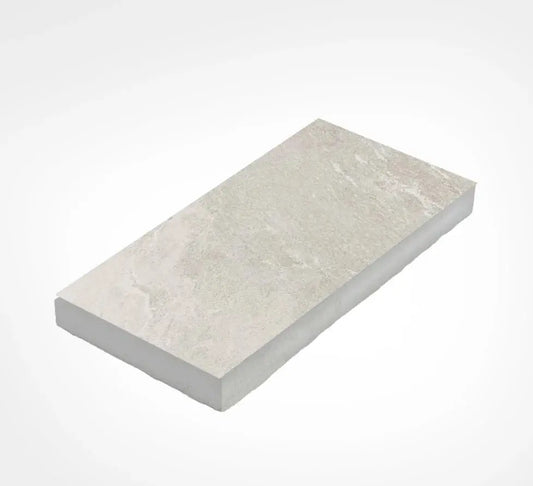
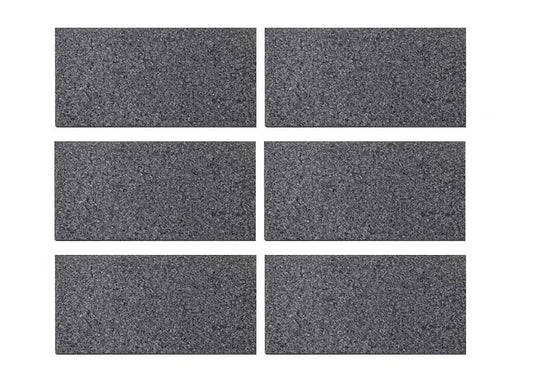
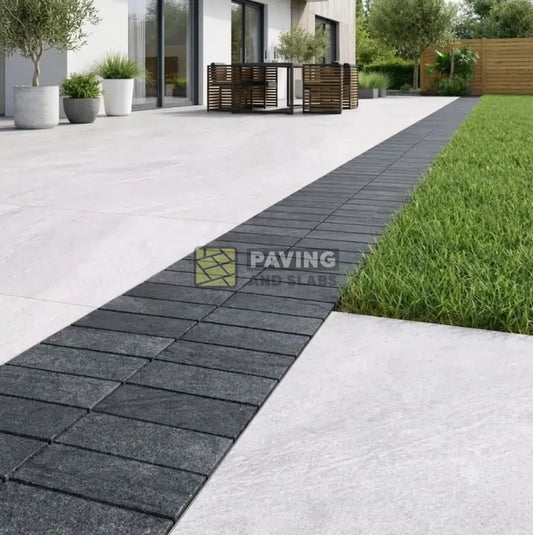
Edging planks are long, narrow natural stone or vitrified porcelain units laid along the boundaries of patios, walkways, and lawns. Their structural purpose is threefold: they lock the main field of paving in place, prevent lateral spreading under load, and provide a clean junction between contrasting surfaces such as turf, decorative gravel, or planting beds.
Edging planks work exceptionally well alongside our porcelain paving slabs collection, where sleek linear dimensions mirror the aesthetic of large-format slabs. They can also be integrated with traditional flagstone paving or general residential patio slabs to establish defined perimeter runs.
What Are Stone Setts?
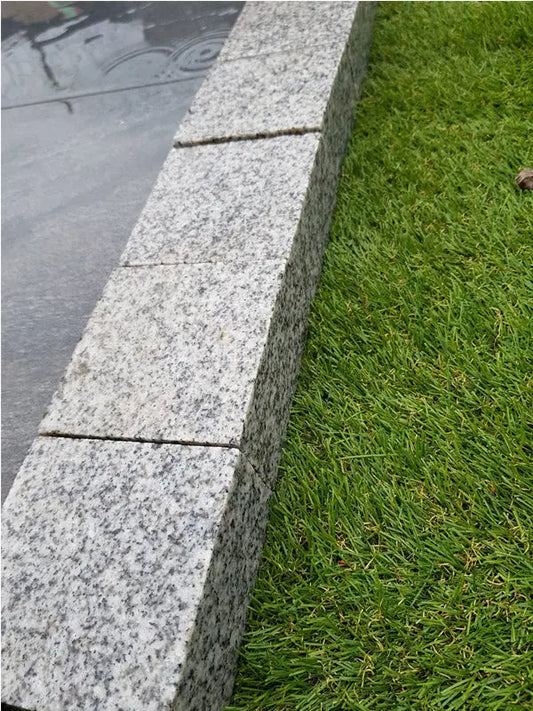
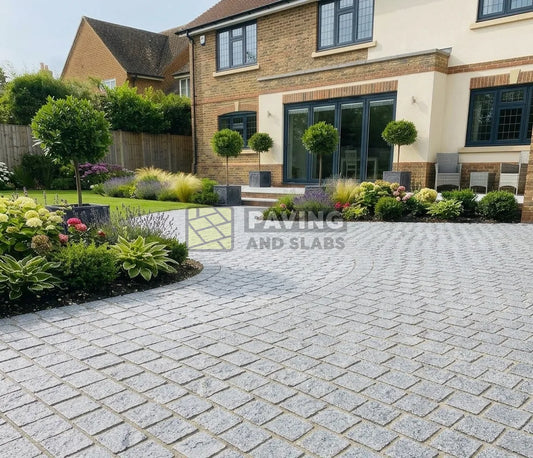
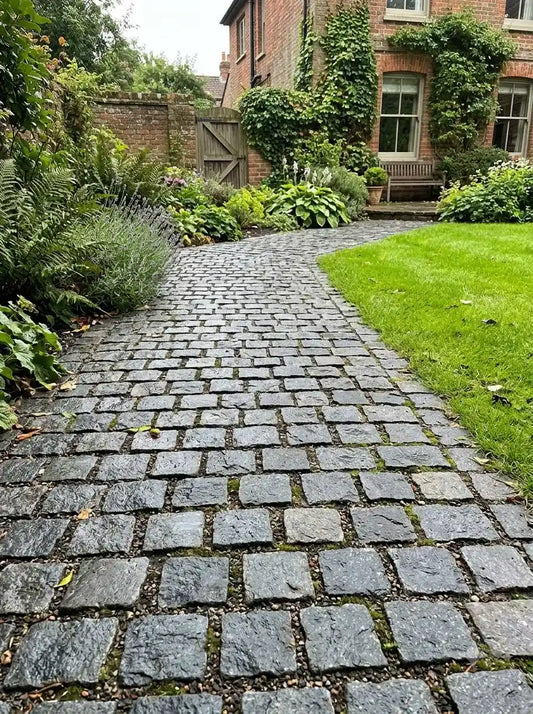
Stone setts are small, dimensional block pavers manufactured from natural granite, sandstone, or limestone. Historically used to pave roadways and urban courtyards, setts are widely utilized in contemporary landscaping to form durable driveway borders, apron entrances, and curved patio rims.
Our natural stone setts pair directly with our granite paving and setts range for heavy-use vehicular installations. They can also be combined with natural cobblestones to create curved aprons, fan patterns, or high-contrast borders around paved outdoor living areas.
Edging Planks vs Stone Setts: Specification & Comparison
Review the primary technical characteristics of edging options to select the correct specification for your groundworks:
| Edging Type |
Primary Material Options |
Best Structural Shape |
Load Ratings |
Ideal Landscaping Use |
| Edging Planks |
Vitrified Porcelain, Slate, Sandstone |
Straight runs, linear perimeters |
Pedestrian foot traffic |
Patio borders, garden walkways, lawn edges |
| Granite Setts |
Silver Grey Granite, Charcoal Granite |
Curves, arcs, straight lines |
High vehicular load rated |
Driveway borders, aprons, step risers |
| Sandstone Setts |
Kandla Grey, Autumn Brown, Raj Green |
Sweeping curves, natural borders |
Medium to light traffic |
Cottage paths, lawn borders, rustic patios |
| Cobblestones |
Natural Granite, Quartzite, Basalt |
Radiused curves, fan layouts |
Vehicular and pedestrian |
Traditional driveways, heritage garden borders |
For detailed dimensional guidance across all paving options, consult our UK Paving Slabs Size and Thickness Guide.
Edging Planks vs Stone Setts: Which System Do You Need?
Selecting between long-format edging planks and individual stone setts depends on geometry, expected surface weight, and overall design scheme:
-
Choose Edging Planks for: Straight runs, minimalist geometric gardens, contemporary porcelain patios, and rapid installation over long linear distances.
-
Choose Stone Setts for: Curved lawn edges, radius corners, serpentine garden paths, high-stress driveway boundaries, and installations requiring contrasting textures.
-
Combined Systems: Many landscapers install straight edging planks along clean building lines while using flexible stone setts to navigate circular lawns, fire pits, or curved steps.
Why Edge Restraint Matters for Long-Term Paving Stability
Lack of proper perimeter support is a leading cause of premature paving failure in the UK. Unrestrained paving edges subjected to temperature changes, groundwater moisture, and pedestrian or vehicular weight experience edge spreading. This structural breakdown results in:
- Joint opening, mortar failure, and rapid weed growth
- Lateral movement and uneven, unsafe slab surfaces
- Water infiltration under perimeter slabs leading to frost heave damage
- Slab cracking along unsupported outer edges
Setting robust stone setts or edging planks into a concrete bed anchors the entire installation, protecting your paving investment over the long term.
Applications for Edging Planks and Setts
-
Patio Boundaries: Locks large-format porcelain or natural stone slabs into place while providing a clear transition to surrounding garden beds.
-
Driveway Retaining Edges: Heavy granite setts withstand vehicle wheel loads, providing stable kerbing that prevents edge blowout.
-
Garden Walkways: Retains gravel, decorative chippings, or bark mulch within path channels, keeping garden zones neat.
-
Lawn & Flower Bed Separation: Creates a solid, permanent mowing strip that eliminates the need for perishable plastic lawn edging.
-
Commercial Landscaping: Meets durability criteria for public walkways, urban plazas, housing developments, and commercial park spaces.
Installation Guidelines for Border Edging Planks & Setts
To maintain a stable, level surface, edge restraints should be installed alongside or prior to main sub-base preparation:
-
Trenching & Sub-Base: Excavate perimeter trenches and compact a solid foundation layer of MOT Type 1 aggregate.
-
Concrete Haunching Bed: Lay edging units on a semi-dry concrete bed (minimum 100mm depth). Build a 45-degree concrete haunch halfway up the rear outer face of the edging to brace against outward force.
-
Curing Time: Allow the concrete haunching to cure for 24 to 48 hours before compacting sub-base material or laying adjacent field slabs.
-
Drainage Slope Alignment: Position the top edge of your border stones slightly below the main slab surface to facilitate unhindered surface water runoff. For detailed drainage planning, consult our UK Paving Drainage Guide.
For specialized base recommendations on stone blocks and setts, read our technical breakdown on Base Preparation for Stone Setts and Cobbles.
Edging Supplies for Landscaping Contractors & Trade
We supply full pallet crates of edging planks and stone setts directly to civil contractors, professional landscapers, and property developers across the UK. With consistent batch sourcing, fast site transit, and competitive bulk pricing, we help keep your trade projects on schedule and within budget.
Combine your order with bulk shipments of Indian sandstone paving or premium porcelain slabs for direct single-site delivery.
Explore Our Complete Paving & Landscaping Range
Browse our extensive catalog of natural stone, porcelain, decking, and fencing products:
Expert Landscaping & Paving Guides
Read our technical resources and practical guides to plan your project successfully:
Frequently Asked Questions: Edging Planks and Setts
What is the difference between edging planks and setts?
Edging planks are long, flat stones or porcelain pieces used to create straight-line borders around patios, paths, and lawns. Setts are small, cube-shaped or rectangular blocks used for curved borders, driveways, and decorative edge patterns. Both serve the same structural purpose: containing the paved area and preventing lateral movement, while suiting different project styles.
Can I use setts to edge a porcelain patio?
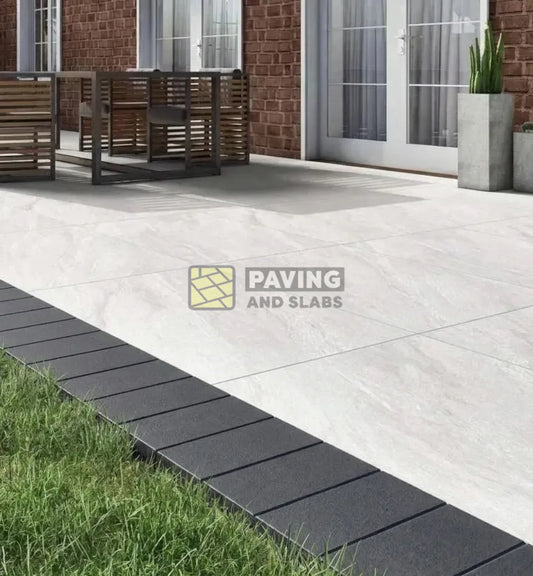
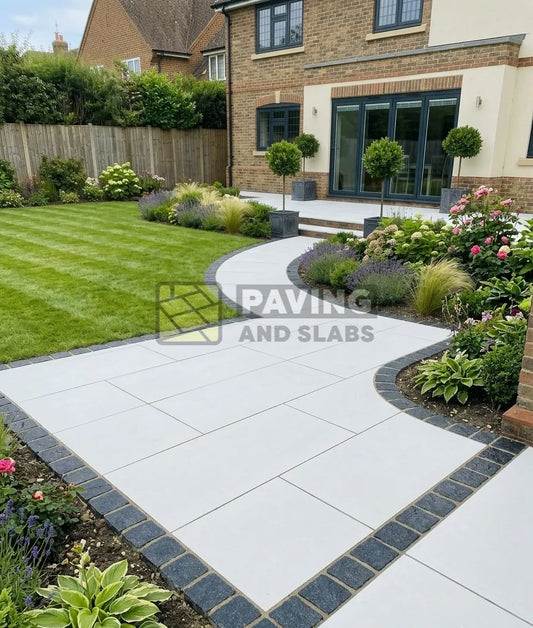
Yes, and it is a popular combination. Granite setts around a porcelain patio create a strong visual contrast between the large-format smooth slabs and the smaller, textured setts, giving a high-end look common in contemporary garden design. Browse our porcelain paving collection to find complementary slabs.
Do edging setts need to be mortared in?
For most applications, particularly driveways and patio borders, yes. Setts should be set on a concrete haunch with mortar joints to ensure they stay firm under lateral pressure. For low-traffic garden path edging, compacted sand bedding with haunching on the outer face can work, but mortared installation is always more durable and is recommended by professional landscapers.
How do I match edging to my existing paving?
The easiest approach is to use the same material family: granite setts with granite paving, sandstone setts with sandstone slabs, or porcelain edging planks with porcelain patio slabs. For deliberate contrast, dark granite setts against light porcelain or pale sandstone is a classic pairing that defines the edge without looking mismatched. Explore our flagstones and granite paving and setts ranges for matching options.
Are edging planks and setts suitable for driveways?
Stone setts are particularly well-suited to driveway edging due to their dense, load-bearing nature. Granite setts in particular are highly resistant to vehicle load and freeze-thaw cycles, making them the most popular choice for driveway borders across the UK. Edging planks are better suited to pedestrian areas such as patios and garden paths.
Do you supply edging planks and setts in bulk?
Yes. We supply edging planks and setts in pallet quantities to landscapers, builders, and large residential projects. Contact us for trade quantities and lead times, or browse our full patio paving range to bundle your delivery.