


Bodo White Porcelain Paving Slabs 900x600x20 mm (21.6 SQM, 40 Slabs Per Pack)
Bodo White Porcelain Paving Slabs 900x600x20 mm (21.6 SQM, 40 Slabs Per Pack)
Couldn't load pickup availability
Bodo White Porcelain Paving Slabs 900x600x20 mm
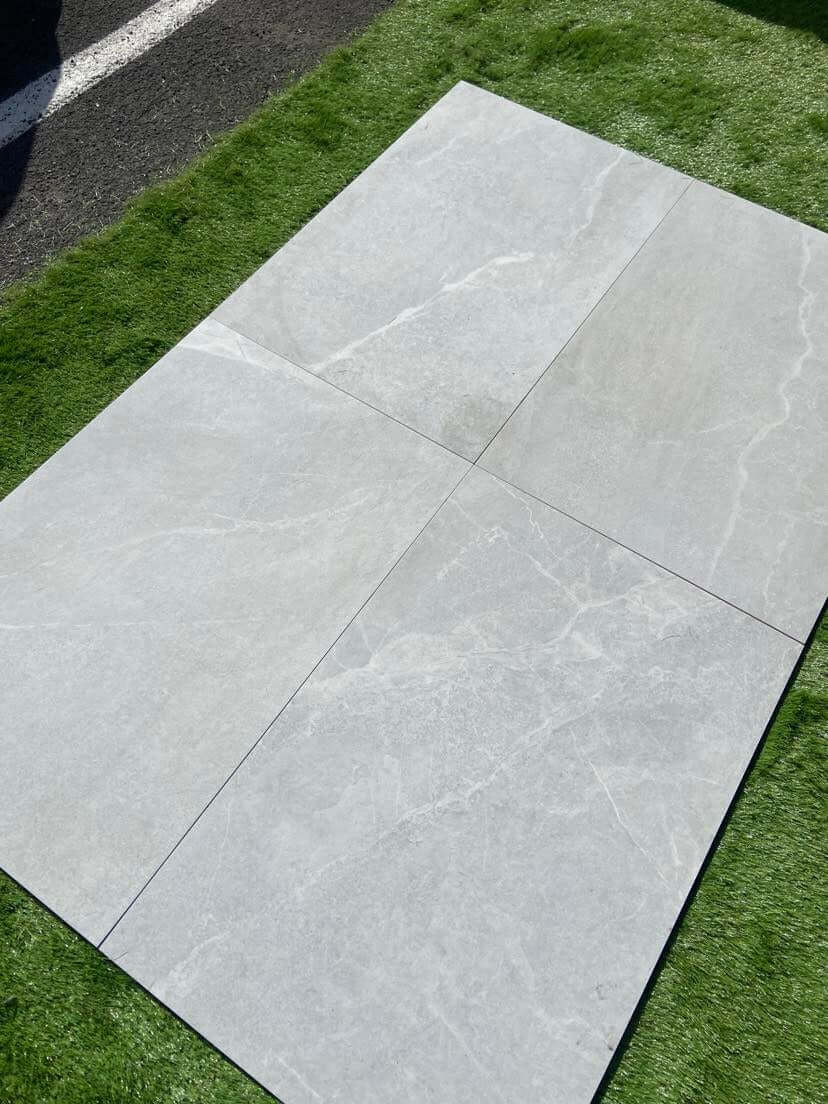
Deliver an ultra-modern, luminous clarity to your outdoor living layout with premium Bodo White Porcelain Paving Slabs 900x600x20mm. Distributed by Paving and Slabs Ltd, this high-end selection brings a striking, clean white finish that creates an immediate sense of expansive architectural scale. The spacious 900x600mm large-format configuration minimizes joint lines to build a seamless ground plane, ensuring your patio, terrace, or garden path stands out as a genuinely premium design feature.
Manufactured using state-of-the-art vitrified porcelain technology, these heavy-duty 20mm calibrated paving flags offer exceptional engineering density. The non-porous core matrix completely locks out moisture entry, protecting your external floor footprint from winter frost splitting, deep organic discoloration, and green algae anchors without requiring regular topical liquid sealers.
Bodo White Performance Highlights
- R11 Slip Resistance: High-grip micro-textured traction safe for wet UK weather.
- Bright Reflective Quality: Bounces available light across compact or north-facing layouts.
- Vitrified Core Matrix: Near-zero water absorption cuts out winter freeze cracks.
- Zero Post-Sealing: Ultra-dense material profile naturally rejects dirt, soot, and oil spills.
Brilliant Light Reflection Engineered for the UK Climate
While natural pale stone alternatives are notorious for weathering, darkening, and trapping damp green slime, Bodo White preserves its pristine appearance across all seasons. The surface is 100% UV-stabilized, meaning it won't bleach under intense summer sun or dull during wet winter afternoons. Mud, leaf tannins, and moss cannot anchor into the vitrified core layer; instead, organic garden grime sits loosely on top, allowing routine sweeping and an annual pressure wash to consistently restore the crisp white finish without specialist cleaners.
For project orders requiring uniform batching across several pallets, please note that minor shade variations can occur between manufacturing runs. If you require the same batch code as your previous purchase, please contact us before placing your order and we will do our best to assist.
Planning an upcoming garden renovation or terrace transformation? Discover trending layouts across the UK by reading our comprehensive guide to the best paving slabs for patios and gardens. For property planners calculating structural layout configurations, our direct material comparison on patio slabs vs paver slabs breaks down performance and durability metrics across different options over time.
Creative Design Pairings & Tonal Contrasts
The bright, neutral canvas of Bodo White serves as an exceptional design anchor that coordinates beautifully with contrast rather than coordination, letting you build striking styling combinations from our store catalog:
- High-Contrast Architectural Framing: Achieve dramatic structural definition using bold dark margins like our Anthracite Dark Paving Slabs.
- Sleek Contemporary Grading: Pair your white footprint with an elegant grey transition border using our mid-toned Kandla Grey Paving Slabs.
- Subtle Multi-Tonal Layouts: Mix varying pale veining profiles by checking out our softer Quartz White Paving Slabs before completing your design line.
Explore our full inventory by browsing our primary Porcelain Paving Collection and curated Patio Slabs categories, or look into our organic Indian Sandstone selections for areas requiring raw riven stone character.
Professional Installation Parameters & Pre-Grout Care
To guarantee a long-lasting layout, Bodo White flags must be laid over a compacted MOT Type 1 aggregate core upon a full continuous wet mortar bed. Spot-bedding must be avoided under any circumstances; omitting full cement contact beneath the flags creates weak structural voids vulnerable to pooling water and cracking under pedestrian foot traffic. Prior to laying, brush a high-strength porcelain bonding slurry primer over the reverse side of every tile to secure an unbreakable bond with the mortar bed.
Maintain a clean 3 to 5mm joint profile with a drainage fall of 1 in 80 away from any building structure to manage surface water effectively. Crucial Installation Tip: Because pale white tiles are highly susceptible to visible grout haze during installation, applying a temporary pre-grout surface protector before jointing is strongly recommended. Review our master guide on how to clean and maintain paving slabs for advanced seasonal care techniques.
Regional UK Supply & Direct Delivery
We supply premium white porcelain paving flags and outdoor vitrified tiles to property owners, garden designers, and trade contractors across the UK. Explore local delivery options in your area:
- Sourcing bright vitrified flags in Bedfordshire? Explore options for porcelain paving in Luton.
- Planning a modern patio in Devon? View our range of porcelain paving in Exeter.
- Designing a terrace in the West Midlands? Check porcelain paving in Walsall.
- Building a bright courtyard in Wiltshire? Explore porcelain paving in Warminster.
- Upgrading a garden layout in Lancashire? View options for porcelain paving in Blackburn.
Technical Data Matrix & Structural Specs
| Product Format | Large-Format Rectilinear Single Paving Flag |
| Dimensional Size | 900mm x 600mm |
| Thickness Calibration | 20mm Calibrated Depth (Heavy-Duty Outdoor Grade) |
| Safety Traction Rating | Certified R11 Anti-Slip Textured Grip |
| Material Profile | Bodo White Premium Vitrified Stoneware Matrix |
Frequently Asked Questions
Are Bodo White Porcelain Paving Slabs suitable for UK weather?
Yes. Bodo White is manufactured from vitrified porcelain with near-zero water absorption and full frost resistance. The dense material structure prevents moisture from penetrating the tile, eliminating the freeze-thaw damage cycle that affects more porous paving through UK winters. The white finish holds its colour consistently across seasons and years, as vitrified porcelain does not shift in tone with moisture or UV exposure the way natural pale stone can over time.
Will Bodo White porcelain paving stay clean in a UK garden?
Yes, more easily than most people expect. The non-porous surface prevents dirt, algae, and organic deposits from embedding within the tile texture. They sit on the surface rather than within it, meaning annual pressure washing consistently restores the white finish without specialist products or intensive effort. The R11 surface texture also ensures the tile does not trap dirt in rough or deep surface grooves between cleans.
Do Bodo White porcelain slabs require sealing?
The tiles themselves do not require sealing after installation. However, applying a protective sealer to the slab surface before the grouting stage is strongly recommended. White porcelain is more susceptible to visible grout haze than darker tiles, and a pre-grouting sealer prevents jointing compound from staining the bright white surface during installation. Once the grout has fully cured, no further sealing treatment is required at any point.
Are Bodo White slabs slippery when wet?
No. Bodo White carries an R11 slip resistance rating, which is the minimum recommended outdoor specification for domestic paving in the UK. The surface texture channels water away from underfoot contact points, maintaining safe traction across patios, pathways, and outdoor dining areas in wet conditions throughout the year. The R11 rating makes this a practical as well as aesthetic choice for UK gardens in regular use through autumn and winter.
What size are Bodo White Porcelain Paving Slabs?
Bodo White is supplied in 900x600mm format. The large slab size reduces joint frequency across patio surfaces, creating a cleaner and more seamless appearance. It works well in stacked bond, offset, and other structured laying patterns and suits the proportions of contemporary patio and terrace designs particularly well.
Can Bodo White porcelain be used for commercial outdoor projects?
Yes. Bodo White is suitable for both residential and commercial outdoor applications including hotel terraces, restaurant seating areas, and premium commercial courtyards.For commercial use, sub-base specification and mortar bed reinforcement should reflect the anticipated foot traffic volume and any furniture or equipment loading. Contact us to discuss your specific project requirements and we can advise on the most appropriate installation specification.
Share

- 5 stars: 4 (67%)
- 4 stars: 1 (17%)
- 3 stars: 1 (17%)
- 2 stars: 0 (0%)
- 1 star: 0 (0%)
After opening we found a slab was borken from middle, we shared the images and asked for refund, but the company denied the refund. Never buying again from them.
Good quality porcelain paving and happy with the finished patio. Delivery was a little slower than expected, but everything arrived safely.
Really pleased with these patio slabs. They look modern, clean and exactly like the style we wanted.
Excellent quality paving slabs. The porcelain has a lovely stone effect and gives the garden a high-end appearance.
Beautiful White color porcelain paving and very happy with our purchase. The patio looks fantastic and the colour works perfectly with our house.
Excellent Paving, Our Patio Looks good after installing them.