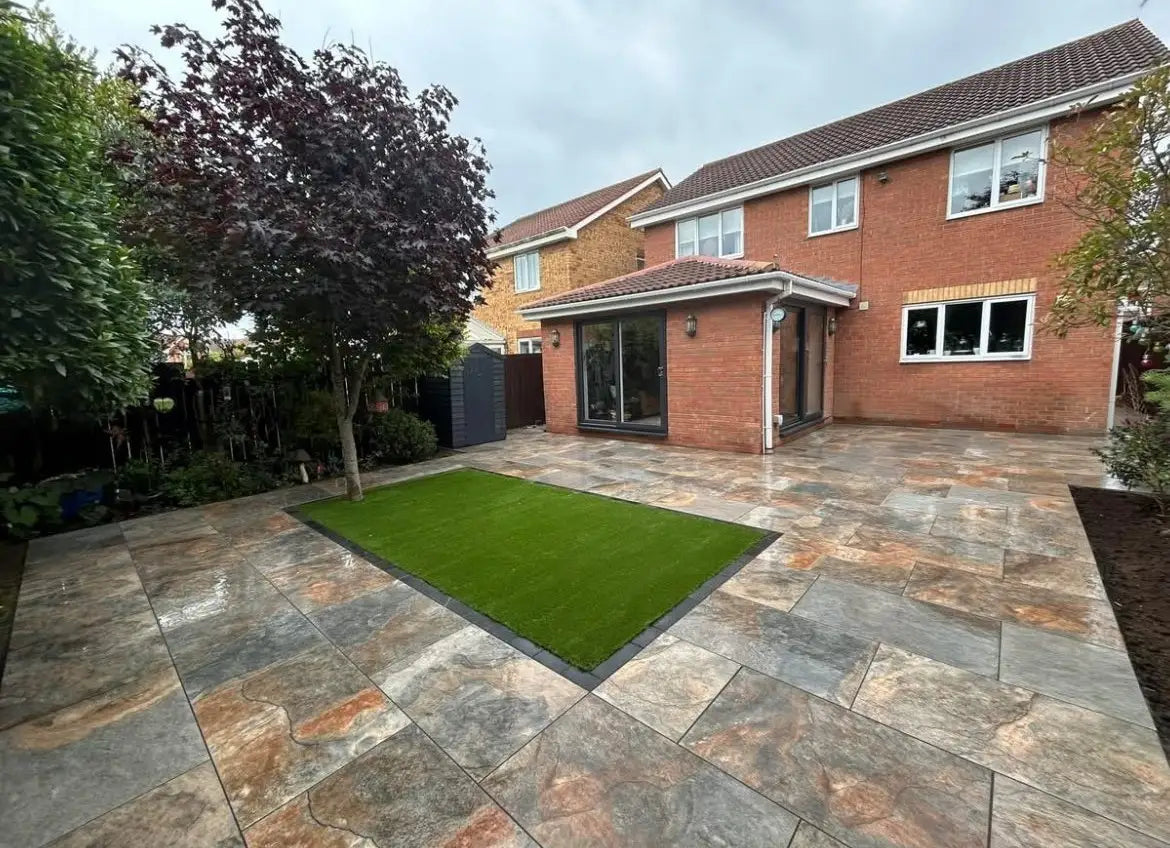
Exeter Bronze Porcelain Paving Slabs 900x600x20 MM (21.6 SQM, 40 Slabs Per Pack) From £25.40/m2
Exeter Bronze Porcelain Paving Slabs 900x600x20 MM (21.6 SQM, 40 Slabs Per Pack) From £25.40/m2
Couldn't load pickup availability
Exeter Bronze Porcelain Paving Slabs & Patio Packs
Introduce warmth, industrial modernism, and raw architectural character to your outdoor living area with Exeter Bronze Porcelain Paving. Available in two versatile options—our uniform 900x600mm Single Slabs (SKU: PS-EXETER-90-60) and our multi-format Patio Packs (SKU: PS-EXETER-PP)—these vitrified slabs feature rich copper undertones, metallic rust detailing, and warm earthy tones that mimic weathered stone and patinated metal.
Engineered for high-end residential landscaping and commercial applications, Exeter Bronze adds depth and character to garden patios, dining terraces, pathways, and outdoor seating zones in Exeter and throughout the UK. The non-porous 20mm vitrified core delivers all the aesthetic advantages of metallic stone without the rust staining, degradation, or sealing demands of natural materials.
Exeter Bronze Key Features & Performance Highlights
- Available SKUs: PS-EXETER-90-60 (Single Slabs) & PS-EXETER-PP (Patio Pack)
- R11 Anti-Slip Safety: Fine textured surface ensures surefooted grip in wet conditions.
- Vitrified Core Strength: Fired at 1200°C for exceptional frost and weather resistance.
- Zero Sealing Required: Non-porous surface naturally resists stains, moss, and algae.
- Rectified Straight Edges: Enables narrow 3mm–5mm grout lines for modern layouts.
- UV & Heat Stable: Rich bronze and rust tones will not fade or discolour over time.
High-Performance Vitrified Porcelain Engineering
Manufactured using vitrified porcelain technology, Exeter Bronze slabs are fired at intense temperatures exceeding 1200°C. This process fuses raw minerals into a dense, non-porous structure with water absorption levels under 0.5%. Moisture cannot enter the slab core, making Exeter Bronze fully frost-resistant and immune to winter freeze-thaw damage, surface spalling, or micro-cracking.
Equipped with an R11 slip-resistance rating, these slabs maintain safety underfoot on wet days, around outdoor kitchens, or along garden walkways. Explore our full range of durable finishes in the Porcelain Paving Collection.
Industrial Modern & Earthy Garden Design Inspiration
The rich earthy copper and patinated rust textures of Exeter Bronze paving create visual depth that complements contemporary architectural elements. The warm metallic tones contrast with corten steel garden features, black aluminium pergolas, dark timber sleepers, and lush green planting.
Choose between the clean, expansive lines of our single-size 900x600mm format or the traditional random-coursing visual movement of our multi-size patio packs. Browse similar location-specific projects on our Porcelain Paving Exeter Page.
Low-Maintenance Outdoor Flooring
Unlike natural metals or porous stones that demand ongoing sealing and specialized chemical treatments, vitrified porcelain is exceptionally low-maintenance. The non-porous body blocks spilled wine, barbecue grease, leaf tannins, and moss from penetrating the surface.
Routine maintenance is simple: periodic sweeping and an occasional wash with clean water or a mild patio detergent keeps your bronze paving looking new. Read our complete guide on how to clean and maintain paving slabs long-term for best practices.
Installation Guidelines & Sub-Base Advice
To ensure structural stability and long-term performance, install Exeter Bronze paving using professional laying practices:
- Sub-Base Preparation: Excavate the area and lay a 100mm–150mm sub-base of well-compacted MOT Type 1 aggregate.
- Full Wet Mortar Bed: Lay slabs on a continuous, full mortar bed (4:1 sand to cement ratio). Do not use spot-bedding or dot-and-dab methods, as hollow voids compromise load-bearing strength.
- Porcelain Slurry Primer: Because vitrified porcelain is non-porous, apply an SBR-based porcelain slurry primer thoroughly to the reverse of every slab before placing on the wet mortar bed.
- Grouting & Spacing: Use tile spacers to maintain a 3mm to 5mm joint gap, and finish with a flexible exterior porcelain grout.
For detailed step-by-step instructions, consult our Porcelain Paving Installation Guide and verify dimensions on our Size and Thickness Guide.
Technical Specifications & Variant Matrix
| Available Variants & SKUs |
Option 1: 900x600x20mm Single Slabs (SKU: PS-EXETER-90-60)Option 2: 20mm Patio Pack (SKU: PS-EXETER-PP) |
| Product Type | Vitrified Outdoor Porcelain Paving |
| Thickness Calibration | 20mm Calibrated Heavy-Duty Profile |
| Color & Surface Finish | Bronze Metallic Stone Effect with Copper & Rust Tones |
| Safety Slip Rating | Certified R11 Anti-Slip Textured Surface |
| Water Absorption | Ultra-Low (< 0.5% - Fully Frost Proof) |
| Pack Coverages |
Single Slabs: 21.6 SQM (40 Slabs / Crate) Patio Pack: 21.06 SQM (72 Slabs / Crate) |
Frequently Asked Questions
What is the difference between the Exeter Bronze single slabs and patio packs?
The 900x600x20mm single slabs (PS-EXETER-90-60) provide uniform large-format layout lines covering 21.6 SQM (40 pieces), while the Patio Pack (PS-EXETER-PP) features a mixed-size multi-format layout covering 21.06 SQM (72 pieces) for traditional random coursing.
Are Exeter Bronze slabs suitable for UK weather?
Yes. Exeter Bronze porcelain slabs are non-porous (<0.5% water absorption), frost-proof, UV-stable, and engineered specifically to withstand heavy rain, algae, and freeze-thaw cycles across the UK.
Do Exeter Bronze porcelain paving slabs require sealing?
No. Vitrified porcelain is dense and non-porous, meaning it repels moisture, stains, leaf tannins, and green algae naturally without needing chemical sealers.
Are Exeter Bronze porcelain slabs slippery when wet?
No. These slabs carry a certified R11 anti-slip surface texture, providing strong underfoot grip and safety during wet weather.
How should Exeter Bronze porcelain paving slabs be installed?
Install on a full, continuous wet mortar bed over a compacted MOT Type 1 sub-base. Always coat the back of each slab with an SBR porcelain slurry primer before laying to ensure a permanent bond.
Share