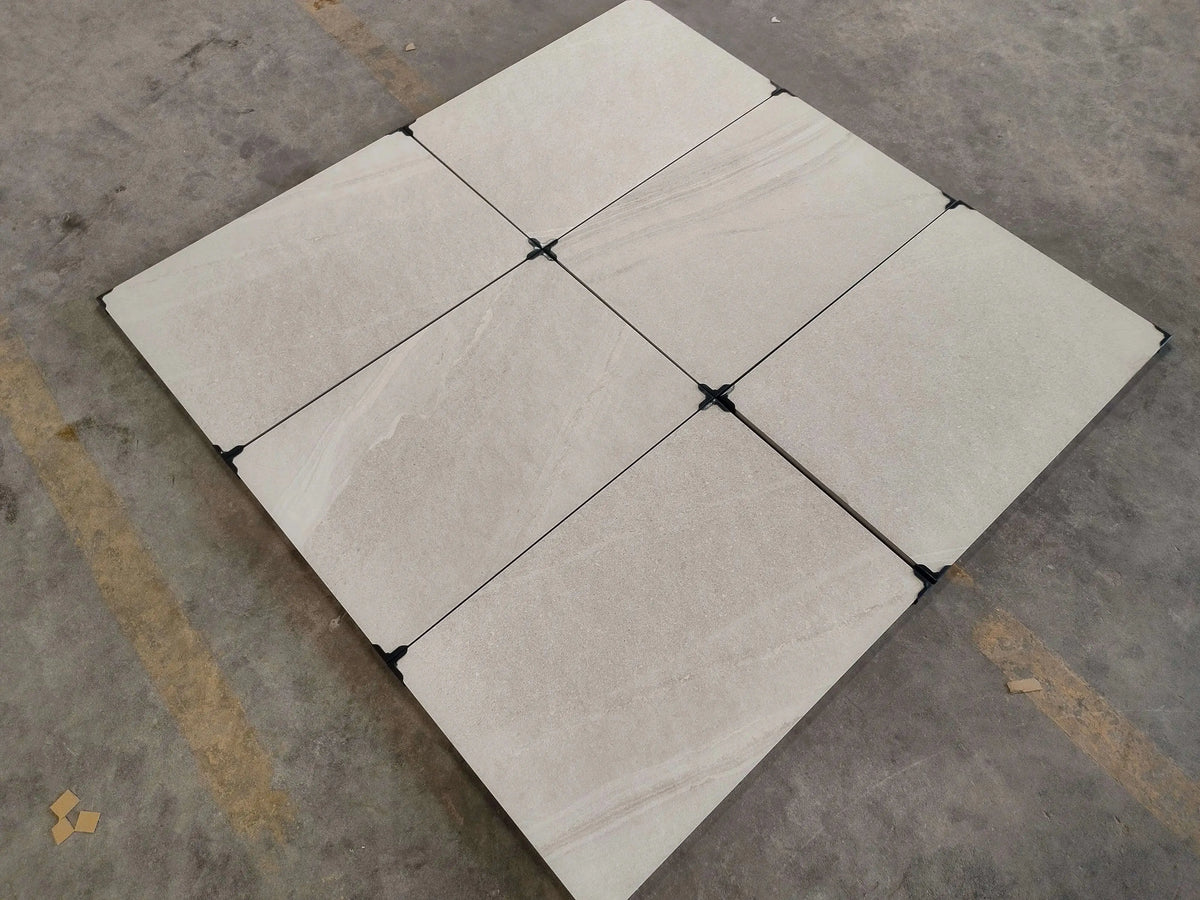
Cutstone Sand Porcelain Paving Slabs 900x600x20 mm
Couldn't load pickup availability
Cutstone Sand Porcelain Paving Slabs 900x600x20 mm
Cutstone Sand Porcelain Paving Slabs bring a warm, natural sandstone character to outdoor spaces without the porosity, sealing requirements, or maintenance demands that genuine natural stone involves. The soft sand-toned stone-effect finish sits in a comfortable mid-range between pale cream and warm buff, offering the organic warmth and textural depth of natural sandstone with the consistency, durability, and low-maintenance performance that vitrified porcelain provides. For patios, terraces, and garden pathways where a natural, earthy aesthetic is the goal without compromising on practical performance, Cutstone Sand is a genuinely compelling choice for UK outdoor spaces.
Manufactured from high-quality vitrified porcelain in a 900x600mm format, these slabs deliver a surface finish that suits both relaxed cottage garden settings and more structured contemporary schemes where natural warmth is preferred over cooler grey tones. The large-format size reduces joint frequency across wide patio areas, creating a cleaner, more seamless surface impression that amplifies the natural stone character of the finish rather than interrupting it with excessive jointing.
The Appeal of Sand-Toned Porcelain in UK Garden Design
Warm sand and buff tones have long been among the most popular choices for UK garden paving, and for good reason. The natural warmth of a sand-toned surface integrates effortlessly with the widest possible range of garden materials, from red and buff brick to natural timber, planted borders, pale gravel, and warm-coloured render. Where cooler grey porcelain can occasionally read as clinical or cold in certain lighting conditions, a sand-toned surface retains warmth across all seasons and light conditions, making it a consistently welcoming and liveable choice for outdoor spaces designed for regular use and enjoyment.
The practical challenge that sand and buff tones present in natural stone form is significant. Pale porous sandstone absorbs moisture, organic staining, and leaf tannins readily, and without consistent sealing and annual maintenance the warm tone can shift and darken unevenly over time. Cutstone Sand porcelain eliminates this challenge entirely through its material composition. The vitrified porcelain construction creates near-zero water absorption, which means the warm sand tone holds its consistency across many years of outdoor use without any sealing, specialist cleaning, or periodic retreatment. Annual pressure washing is all that is required to restore the finish to its original appearance consistently.
The non-porous surface also delivers frost resistance, stain resistance, and algae resistance as inherent material properties. Moisture cannot penetrate the tile, which eliminates the freeze-thaw damage cycle that progressively affects more porous paving materials through the UK's winter frost cycles. Organic deposits sit on the surface rather than embedding within it, which means the warm sand finish remains clean and consistent across the full seasonal range without intensive upkeep.
The R11 slip resistance rating ensures safe underfoot traction in wet conditions across all seasons. For a warm-toned surface that may be used on patios, garden pathways, and outdoor dining areas where family use and year-round practicality are priorities, R11 provides the grip specification that makes Cutstone Sand a safe as well as aesthetically rewarding choice for UK outdoor spaces throughout the year.
Design Applications and Scheme Compatibility
The sand tone of Cutstone Sand sits in a design-versatile position that complements a broader range of architectural contexts and garden styles than more directional colour choices. For traditional and period properties where warm natural stone has always been the most appropriate material choice, Cutstone Sand porcelain delivers the visual character of sandstone with none of the ongoing maintenance burden. For contemporary properties and modern garden renovations where a warmer, more organic alternative to grey porcelain is preferred, the sand tone introduces natural warmth that prevents the overall scheme from feeling cold or overly structured.
In cottage and country garden settings, sand-toned paving integrates naturally with the warm material palette of older UK properties and the organic planting schemes that characterise traditional British garden design. In suburban family gardens, the warm neutral tone suits a very wide range of house styles and garden configurations, making it one of the lowest-risk colour choices for homeowners who want a premium result without committing to a more directional design statement.
For outdoor entertaining areas and dining terraces, warm sand-toned porcelain has the quality of looking welcoming and comfortable in all light conditions, including the low winter sun and overcast grey light that UK gardens spend much of the year in. This makes Cutstone Sand a particularly strong choice for spaces designed for year-round social use rather than simply summer enjoyment.
For schemes that incorporate tonal contrast within the paving surface, our Anthracite Dark Paving Slabs provide a bold dark counterpoint that creates strong visual definition when used alongside Cutstone Sand for border strips, step surfaces, or feature zones. For softer contrast within a warmer palette, Kandla Grey Paving Slabs offer a mid-toned stone-effect option that transitions naturally from sand tones without tonal clash. For those who want a lighter, cooler alternative worth comparing before finalising their choice, Quartz White Paving Slabs sit at the pale end of the palette and create a high-contrast pairing with warm sand tones that reads as clean and architectural.
Our full Porcelain Paving Collection covers the complete range of tones and finishes, and our Patio Slabs and Indian Sandstone collections provide natural stone alternatives for secondary surfaces, border edging, or feature areas where genuine riven stone texture is preferred alongside the porcelain main surface.
For design inspiration before finalising your material choices, our guide to the best paving slabs for patios and gardens in 2025 covers trending formats and finishes across the current UK paving market. Our overview of paving slabs versus gravel versus decking provides a useful cost and practicality comparison for anyone still weighing up their surface options, and our guide to flagstone patio designs that transform outdoor spaces covers layout approaches relevant to warm-toned natural stone effect schemes.
Installation Guidance
Cutstone Sand Porcelain Paving Slabs must be laid on a full continuous mortar bed over a properly compacted sub-base. Spot-bedding is not appropriate for porcelain under any circumstances, as hollow voids beneath the tile create stress concentration points that crack the slab under foot traffic regardless of quality or thickness. A compacted MOT Type 1 sub-base of 100 to 150mm is appropriate for standard residential patio use on stable ground, increasing to 150 to 200mm on clay-heavy soils or for any surface subject to vehicle loading.
Apply a porcelain slurry primer to the back of each slab before laying to ensure good adhesion between tile and mortar bed. Maintain a consistent joint spacing of 3 to 5mm and finish with a suitable outdoor porcelain grout once the mortar has fully cured. Incorporate a drainage fall of 1 in 80 away from the building to manage surface water effectively. For pale sand-toned porcelain, applying a protective sealer to the tile surface before the grouting stage is advisable to prevent grout haze from staining the warm surface during installation.
For ongoing care once the patio is in use, our guide to cleaning and maintaining paving slabs covers routine washing, jointing inspection, and seasonal maintenance for porcelain surfaces in practical detail.
Key Features
- Size: 900x600mm for large-format, seamless patio and terrace surfaces
- Warm sand stone-effect finish with natural colour depth and organic character
- R11 slip-resistant surface for safe outdoor use in wet UK conditions
- Frost-resistant vitrified porcelain with near-zero water absorption
- Stain-resistant and algae-resistant non-porous surface, no sealing required
- Low maintenance, suitable for residential patios and commercial outdoor spaces
- Works in stacked bond, offset, and other structured laying patterns
Related Porcelain Paving Options
- Anthracite Dark Paving Slabs — bold dark contrast for border strips and feature zones alongside warm sand schemes
- Kandla Grey Paving Slabs — mid-toned stone-effect option for softer tonal contrast within a warm palette
- Quartz White Paving Slabs — cooler pale alternative worth comparing before finalising your colour choice
Explore More Paving Collections
- Porcelain Paving Collection — the full range of colours, finishes, and formats across our porcelain range
- Patio Slabs — curated options across natural stone and engineered materials for residential garden projects
- Indian Sandstone — natural stone alternatives for secondary surfaces and complementary detailing
Frequently Asked Questions
Are Cutstone Sand Porcelain Paving Slabs suitable for UK weather?
Yes. Cutstone Sand is manufactured from vitrified porcelain with near-zero water absorption and inherent frost resistance. The material structure prevents moisture from penetrating the tile, eliminating the freeze-thaw damage cycle that progressively affects more porous paving materials through UK winters. The warm sand finish holds its colour and character consistently over time, as vitrified porcelain does not fade, darken, or shift in tone with UV exposure or moisture the way natural sandstone can over many years of outdoor use.
Do Cutstone Sand Porcelain Paving Slabs require sealing?
The tiles themselves do not require sealing after installation. However, applying a protective sealer to the slab surface before the grouting stage is advisable for pale sand-toned porcelain, as lighter tiles are more susceptible to visible grout haze during installation. Once the grout has fully cured and the surface sealer is removed, no further sealing treatment is required at any stage. This is a significant practical advantage over natural sandstone, which requires sealing at installation and periodic resealing every two to three years.
Are Cutstone Sand slabs slippery when wet?
No. Cutstone Sand carries an R11 slip resistance rating, which is the minimum recommended outdoor specification for domestic paving in the UK. The surface texture channels water away from underfoot contact points, maintaining safe traction across patios, terraces, and garden pathways in wet conditions throughout the year. The R11 rating applies consistently across the full lifespan of the tile and does not reduce with wear.
How should Cutstone Sand Porcelain Paving Slabs be installed?
These slabs must be laid on a full continuous mortar bed over a compacted MOT Type 1 sub-base. Spot-bedding is not appropriate for porcelain under any circumstances. Apply a porcelain slurry primer to the back of each slab before laying. Maintain a joint spacing of 3 to 5mm and finish with outdoor porcelain grout once the mortar has cured. Apply a protective sealer to the tile surface before grouting to prevent grout haze on the pale surface. Incorporate a drainage fall of 1 in 80 away from the building.
How do I maintain Cutstone Sand Porcelain Paving long term?
Annual pressure washing is sufficient to keep the surface in excellent condition. The non-porous surface prevents dirt and organic deposits from embedding within the tile texture, so pressure washing consistently restores the warm sand finish without specialist products. Inspect jointing annually and replace any sections that have washed out or cracked to maintain the integrity of the surface. No sealing or specialist treatments are required at any point during the lifespan of the paving.
Can Cutstone Sand porcelain be used for commercial outdoor projects?
Yes. Cutstone Sand is suitable for both residential and commercial outdoor applications including hotel terraces, restaurant seating areas, commercial courtyards, and public outdoor spaces. For commercial use, sub-base specification and mortar bed reinforcement should reflect the anticipated foot traffic volume and any furniture or equipment loading. Contact us to discuss your specific project requirements and we can advise on the most appropriate installation specification.
```
Share

What are the best types of paving slabs for UK weather?
For the UK's unpredictable weather, the best paving slabs are porcelain paving slabs, Indian sandstone slabs, and concrete paving slabs. Porcelain is highly weather-resistant, non-porous, and ideal for wet or frosty conditions, making it perfect for British gardens and patios.
Are porcelain paving slabs better than natural stone patio slabs?
Yes, porcelain paving slabs are considered better for low-maintenance outdoor spaces. They are stain-resistant, slip-resistant, and do not absorb water, unlike natural stone. However, natural sandstone patio slabs offer a rustic, timeless look and are easier to shape and cut for custom landscaping.
Do I need planning permission to install patio slabs in my garden?
Generally, no planning permission is required to install patio slabs in your UK garden. However, if your property is a listed building, in a conservation area, or you're installing over 5m² with non-permeable materials without drainage, you may need to consult your local council.
Can I use paving slabs for driveways in the UK?
Yes, but for driveways, choose thicker paving slabs (usually 50mm or more) made of concrete or porcelain. These materials can withstand heavy vehicle loads and harsh weather conditions. Always ensure a proper sub-base and drainage for long-term performance.
How can I prevent weeds from growing between paving slabs?
To prevent weeds between your paving slabs, use a weed control membrane under the base, fill joints with a resin-based jointing compound, and consider sealing the slabs. Regular sweeping and pressure washing also help maintain a weed-free patio.
Which paving slabs require the least maintenance?
Porcelain paving slabs are the most low-maintenance paving option in the UK. They are non-porous, resist moss, algae, and stains, and do not require sealing—making them ideal for homeowners seeking hassle-free, long-lasting patios.
How do I choose the right colour of patio slabs for my garden?
When choosing a colour for your patio slabs, consider your home’s exterior, garden style, and light exposure. Popular colours like Kandla Grey, Warm Teak, and Buff Sandstone blend well with modern and traditional British gardens. Lighter tones make small spaces feel bigger, while darker slabs add bold contrast.
How long do paving slabs last in the UK?
With proper installation and minimal maintenance, paving slabs can last 20 to 30 years or more. Porcelain slabs have the longest lifespan due to their high density and low water absorption, while natural stone slabs like sandstone and granite are also extremely durable.
What base do I need for installing patio slabs?
A strong base for patio slab installation typically includes 100mm of compacted Type 1 MOT hardcore, followed by a mortar bed (4:1 mix of sharp sand and cement). Proper levelling and drainage are essential to avoid puddles or movement over time.
What are the benefits of composite decking boards over timber decking?
Composite decking boards are more durable, low-maintenance, and weather-resistant than traditional timber. They don't rot, splinter, or require staining and can last over 25 years. Composite decking is also eco-friendly, made from a mix of recycled wood fibres and plastic, ideal for sustainable UK gardens.
Can composite decking boards be cut and installed like timber?
Yes, Composite decking boards can be cut using standard woodworking tools. They are installed using hidden fasteners or clip systems for a clean, modern finish. Ensure proper spacing and subframe ventilation to allow for expansion and drainage.
What is composite fencing and why is it popular in the UK?
Composite fencing is made from a blend of recycled plastic and wood fibres, offering a durable, rot-proof alternative to traditional timber fences. It’s ideal for UK weather, requires no painting, and maintains its appearance for years with minimal care.
What is permeable paving and why is it trending in the UK?
Permeable paving slabs allow rainwater to drain through the surface, reducing pressure on urban drainage systems and helping to prevent flooding. They’re increasingly popular in the UK due to changes in SuDS (Sustainable Drainage Systems) regulations, and are ideal for driveways, patios, and garden paths. Popular options include gravel grids, permeable block paving, and porous concrete slabs.
How long does artificial lumber last outdoors in UK climates?
Artificial lumber is built to last 25–30 years or more in harsh UK weather, with no risk of rot, warping, or cracking. It requires minimal cleaning and retains its appearance longer than wood in damp and cold environments.
What are the top modern garden paving trends for UK homes in 2025?
Modern garden paving in the UK now focuses on clean lines, large-format porcelain slabs, neutral colours like grey and anthracite, and minimalist layouts. Other trends include mixed materials (e.g., decking + slabs), contrasting borders, and lighting integration within patios. Homeowners are also embracing indoor-outdoor paving continuity using matching porcelain patio slabs.
What are some creative ideas for two-level garden paving in sloped gardens?
For sloped gardens, two-level paving adds depth and functionality. Use retaining walls, stone steps, and contrasting paving slabs to define each level. A popular design involves a seating area on the lower level and a dining space or lawn above, connected with granite or porcelain step kits. Use different patio slabs for each level to create visual interest.
What are the most popular driveway paving trends in the UK right now?
Current driveway trends in the UK include porcelain driveway slabs, permeable block paving, and graphite or dark-toned paving for a sleek, contemporary look. Contrasting edging, geometric laying patterns, and driveway lighting are also on the rise. Homeowners prefer materials that combine aesthetic appeal, durability, and low maintenance, such as porcelain paving slabs with anti-slip textures.
What are sustainable paving slab options for eco-friendly UK gardens?
Sustainable paving slabs include recycled concrete slabs, porcelain slabs with low water absorption, and natural sandstone sourced responsibly. These materials have a long lifespan, require minimal maintenance, and reduce environmental impact. Using permeable paving also helps improve local drainage and reduce surface runoff — key for eco-conscious garden design.
Where is the best place to buy quality paving slabs and patio slabs in the UK?
For a wide selection of premium paving slabs and patio slabs, visit pavingandslabs.co.uk. They offer affordable prices, fast UK delivery, and a range of options including porcelain, Indian sandstone, granite, and more.