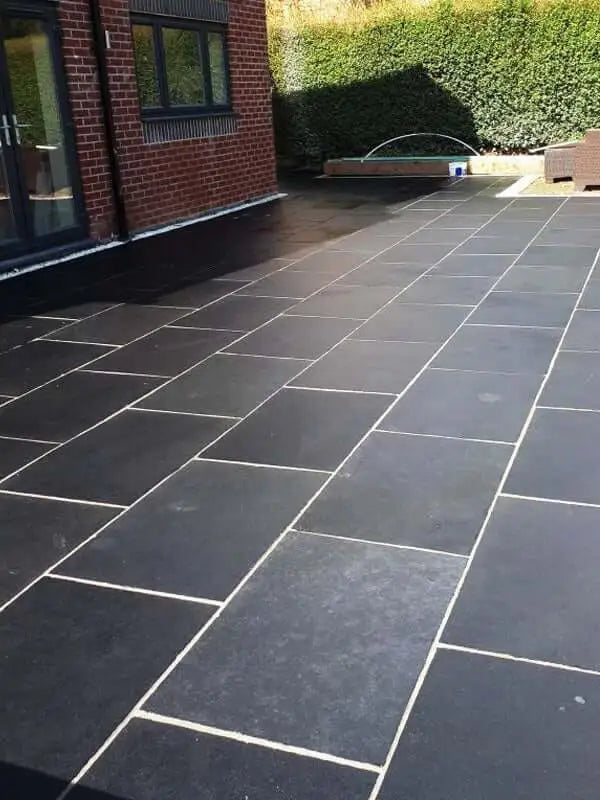
Black Limestone Paving Slabs From £24.50/m2
Black Limestone Paving Slabs From £24.50/m2
Couldn't load pickup availability
Black Limestone Paving Slabs | Natural Stone Patio Slabs
Black limestone paving carries a quiet authority that few other natural stone materials can match. The deep, near-black tones shift subtly in different light conditions, revealing undertones of grey, blue, and charcoal that give the surface a depth and richness that flat colour simply cannot replicate. Whether you are designing a sleek contemporary terrace, a sophisticated garden pathway, or a formal outdoor entertaining space, black limestone delivers a finish that looks considered and premium without requiring constant attention to maintain it.
Supplied by Paving and Slabs Ltd, our Black Limestone Paving Slabs are hand-cut from natural stone and carefully finished to provide a surface that combines genuine aesthetic impact with the practical characteristics that UK outdoor conditions demand. Slip resistance, weatherproofing, and long-term durability are built into the material itself, not added as afterthoughts, making black limestone one of the most rewarding natural stone choices for serious garden and landscaping projects.
The Character of Black Limestone
Natural limestone forms over millions of years from compressed marine sediment, and that origin gives it a surface character that is entirely its own. Black limestone, quarried primarily from regions with the right geological conditions to produce its distinctive dark pigmentation, has a subtly textured riven surface that provides natural grip underfoot while retaining the refined visual quality that makes it so appealing in design terms.
Unlike porcelain or concrete, no two black limestone slabs are identical. The stone carries natural variation in tone, surface texture, and patterning that creates a laid surface with genuine depth and movement. In certain light conditions, particularly under low winter sun or artificial garden lighting, this variation becomes the feature of the space rather than the background to it. Black limestone patios photographed under evening lighting consistently produce some of the most visually striking outdoor results of any paving material.
The hand-cut edges of our black limestone slabs give each piece a clean, precise profile that works equally well in formal geometric layouts and more relaxed irregular arrangements. The finish is premium without being fussy, and the material suits both minimalist contemporary design and more traditional garden schemes where dark stone provides contrast against planting, pale render, or lighter boundary materials.
Practical Performance in UK Conditions
Black limestone is a dense, hard-wearing natural stone that performs reliably in the UK's variable outdoor climate. Its inherent slip resistance, derived from the riven surface texture of the natural stone, provides safe traction on wet surfaces without the need for additional surface treatments. For patios, garden pathways, and outdoor terraces that see year-round use across a British climate, this is a meaningful practical quality rather than a marketing specification.
Like all natural stone paving, black limestone benefits from sealing after installation. An impregnating stone sealer applied before the surface enters regular use reduces moisture absorption, protects against surface staining from organic matter, leaf tannins, and general garden use, and significantly reduces the risk of frost damage through the winter months. The UK's occasional but reliable frost cycles between November and March create freeze-thaw conditions that can affect any porous stone surface over time if moisture is allowed to penetrate unchecked. Resealing every two to three years maintains this protection with minimal effort. Our guide on cleaning and sealing natural stone paving covers the process in full and applies equally to limestone surfaces.
Once properly sealed and installed, black limestone is genuinely low maintenance. An annual pressure wash removes accumulated surface soiling, moss, and algae, and the dark tones of the stone mean that general garden dirt is far less visible between cleans than it would be on lighter-coloured materials. For homeowners who want a premium-looking surface that rewards occasional rather than constant attention, black limestone is a compelling natural stone choice.
Design Applications and Pairing Possibilities
Black limestone is a versatile design material that works across a broader range of garden styles than its strong visual character might initially suggest. In contemporary minimalist gardens with clean lines, pale render walls, and architectural planting, black limestone provides the grounding element that anchors the space visually. The deep tones recede under furniture and planters, allowing other design elements to read clearly rather than competing with the floor surface.
In more traditional or transitional garden schemes, black limestone works beautifully as a contrasting material alongside lighter stone, white gravel, or pale concrete structures. A black limestone terrace edged with pale limestone copings, or a pathway of black slabs set against a bed of silver chippings, creates high-contrast definition that reads well across all seasons.
For the boldest outdoor design statements, pairing black limestone with our Black Granite Paving Slabs creates a layered tonal scheme that combines the warmth of limestone with the colder, harder character of granite. The two materials complement each other in tone while offering clearly different surface textures that add tactile interest to a large paved area.
Our full Limestone Paving Collection includes a range of shades and finishes beyond black, from warm honey and ivory tones through to cool silver-grey, allowing you to mix and contrast within the limestone family for a unified but varied result. For vertical surfaces, our Porcelain Wall Claddings offer a practical and visually coherent way to extend the material language of a dark-toned patio onto boundary walls, raised beds, or outdoor kitchen structures.
To complete the scheme with considered detailing, our Cobblestones Collection provides matching setts and cobblestones for pathway edging, border definition, and feature detailing that ties a landscaped space together at ground level. Consistent detailing at the edges and transitions of a paved area is often what separates a professional-looking result from a competent but unfinished one.
Installation Guidance for Black Limestone
Black limestone should be laid on a full mortar bed over a properly compacted sub-base. The sub-base depth depends on ground conditions and intended use, with 100 to 150mm of compacted MOT Type 1 appropriate for residential patio use on stable ground, and 150 to 200mm recommended on clay-heavy soils or for any surface that will take vehicle loading. Like all natural stone, black limestone should never be spot-bedded, as hollow sections beneath the slab create stress points that crack under foot traffic over time.
Sealing before grouting is strongly recommended. Applying a sealer to the slab surface before jointing prevents grout haze from staining the stone during the finishing stage, which is particularly important on dark stone where grout residue can be difficult to remove cleanly once cured. Our guide to cleaning and maintaining paving slabs covers jointing, sealing, and ongoing care in practical detail.
For further reading before committing to a design direction, our guides on flagstone patio designs that transform outdoor spaces and the best paving slabs for patios and gardens in 2025 cover design approaches and material comparisons across the full range of natural stone and engineered options currently available.
Technical Data Matrix & Structural Specs
| Available SKU / Variants | PS-BL-90-60 (900x600 22MM Hand-Cut - 37 Pcs / 20 SQM) PS-BL-PP (Patio Pack 22MM Hand-Cut - 60 Pcs / 18.36 SQM) |
| Material Matrix | Natural Black Limestone with Riven Surface Texture |
| Thickness Calibration | 22mm Calibrated Outdoor Grade Natural Stone |
| Surface Finish | Naturally Riven, Hand-Cut Edges |
| Recommended Care | Impregnating Sealer Applied on Installation; Reseal Every 2-3 Years |
Frequently Asked Questions
Does black limestone paving need sealing in the UK?
Yes, sealing is strongly recommended for black limestone installed in UK outdoor conditions. Limestone is a porous natural stone, and an impregnating sealer applied at installation reduces moisture absorption, prevents surface staining from organic matter and leaf tannins, and significantly reduces the freeze-thaw damage risk during the UK's winter frost cycles. Resealing every two to three years maintains this protection with minimal ongoing effort. Apply the sealer before jointing to prevent grout haze from staining the dark stone surface during installation.
Is black limestone slippery when wet?
No. Our black limestone paving has a natural riven surface texture that provides genuine slip resistance on wet surfaces. The texture channels water away from underfoot contact points, maintaining safe traction in the wet conditions that UK patios and pathways regularly experience. This slip resistance is inherent to the natural stone surface and does not require additional coatings or treatments to achieve.
How do I maintain black limestone paving?
Annual pressure washing removes accumulated moss, algae, and surface soiling effectively. The dark tones of black limestone mean general garden dirt is less visible between cleans than on lighter stone. Inspect and refresh the sealer every two to three years, and replace jointing compounds if cracking or erosion is visible. Open joints allow moisture to penetrate to the mortar bed beneath, which can cause surface movement and accelerate frost damage over successive winters. Our cleaning and maintenance guide covers the full care process in practical detail.
Can black limestone be used for driveways?
Black limestone is well suited to pedestrian areas, patios, and garden pathways, but for driveways or any surface subject to regular vehicle loading, a thicker slab specification and heavier sub-base is required. Check the specific thickness and load-bearing specification of any slab before using it in a vehicle access area, and ensure the sub-base is a minimum of 150 to 200mm of compacted MOT Type 1 for driveway use. For dedicated driveway applications, our black granite paving slabs offer comparable aesthetics with a harder, more load-resistant material profile.
What styles does black limestone suit best?
Black limestone is particularly effective in contemporary minimalist garden schemes, where its deep tones ground the space and allow architectural planting and structural elements to read clearly. It also works well in formal traditional schemes as a contrasting material alongside lighter stone or pale render. Pairing black limestone with our black granite slabs creates a bold, layered dark-toned scheme, while combining it with silver or ivory limestone from our wider collection produces high-contrast definitions that photograph and present exceptionally well in all seasons.
How does black limestone compare to porcelain paving?
The two materials offer fundamentally different qualities. Porcelain is non-porous, requires no sealing, and is essentially maintenance-free beyond annual pressure washing. Black limestone offers something that porcelain cannot replicate, specifically genuine natural variation, warmth, and surface character that develops beautifully over time. Limestone requires sealing and slightly more ongoing care, but rewards that investment with an authenticity and depth of appearance that engineered materials cannot match. The right choice depends on whether low-maintenance performance or natural material character is the primary priority for your project.
Share