Composite Fencing Panel Installation Guide

Composite Fencing Panel Installation Guide — Paving and Slabs Ltd
Installation Guide

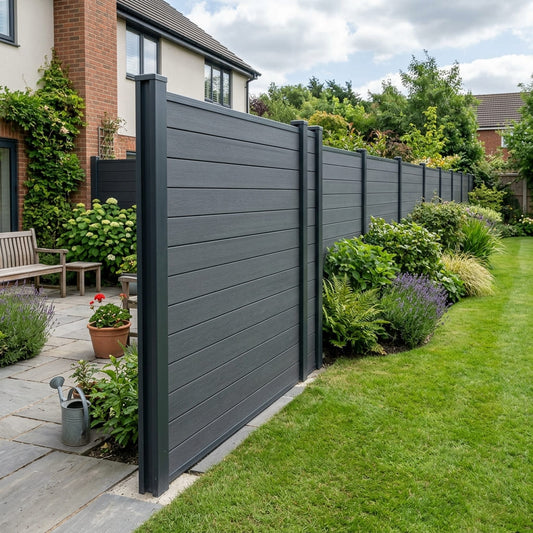
Composite Fencing Panel
Step-by-Step Installation

A complete guide to installing WPC composite fence panels with aluminium posts, support beams, and connection clips — for a professional finish that lasts decades.

🔩 WPC Boards + Aluminium Frame 🏠 UK Residential & Commercial 🌧️ Rot & Weather Resistant ⏱️ Approx. 2–4 hrs per panel bay
⚠️

Before You Begin — Important

  • Check for underground services (gas, water, electric, telecoms) before any post excavation. Call Dial Before You Dig or use a cable avoidance tool (CAT scanner).
  • Confirm fence line is within your property boundary. Consult your deeds or a surveyor if in doubt.
  • Check whether planning permission is required — fences over 1m adjoining a highway or over 2m elsewhere may require consent under UK Permitted Development rules.
  • Inspect all components upon delivery before installation. Do not fit damaged panels or posts. Once installed, goods cannot be returned.

🔩 Components & Part References

HX100K100A
WPC Post
Main structural upright; aluminium-core WPC composite post
FW162Q20
Fencing Board
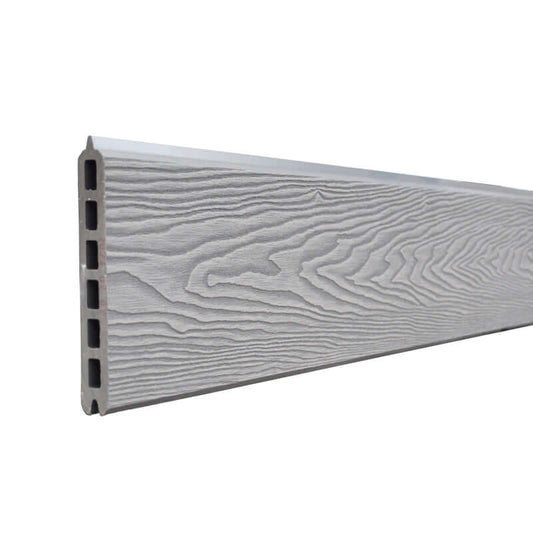
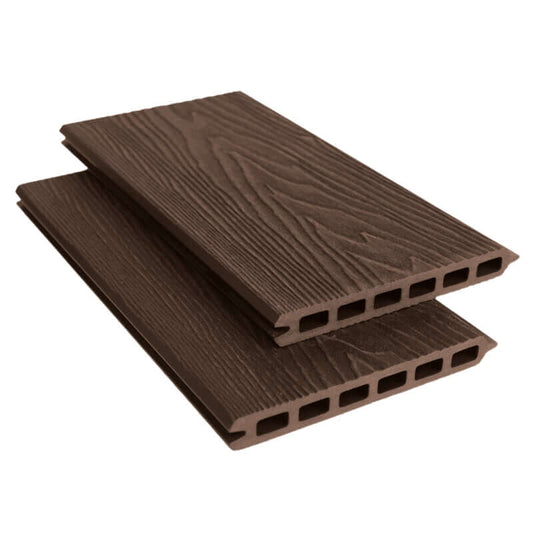
Horizontal WPC composite infill boards
HX55T20
Aluminium Top Beam
Top horizontal aluminium support beam
HX55T20
Aluminium Support Beam
Bottom horizontal aluminium support beam
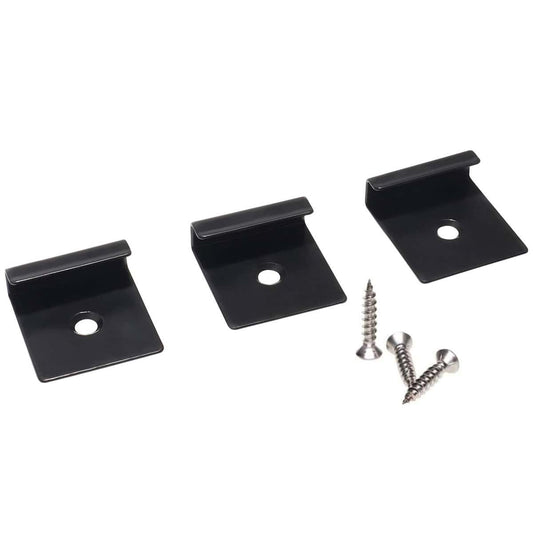
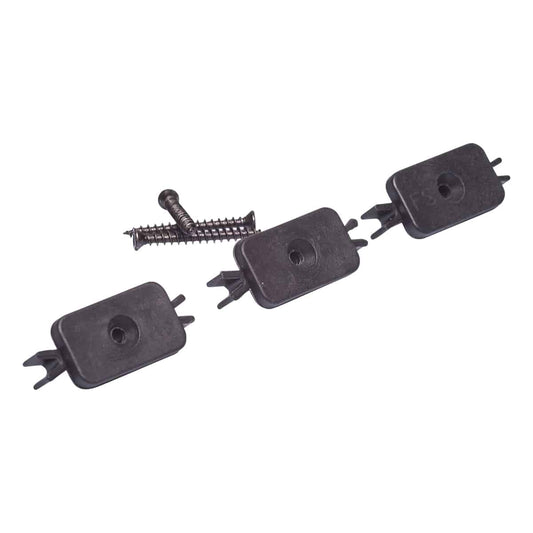
Connection Clip
Top clip securing boards to aluminium top beam
Connection Clip L
Bottom L-clip securing boards to support beam
M5×50
Galvanised Screws
Stainless/galvanised fixing screws for beam-to-post connection
HXDZ100
Galvanised Base Tube
Ground anchor tube welded with base plate
M10×100
Expansion Screw
Concrete anchor bolt for base tube to ground fixing
Post Cap
Decorative and weatherproofing cap for post top
Post Skirt
Ground-level cover plate concealing base tube

🔧 Tools & Materials Required

  • Post hole digger or spade
  • Spirit level (1.2 m min. recommended)
  • Tape measure & chalk line
  • Concrete mix (postcrete or ready-mix)
  • Drill & masonry/SDS drill bits
  • Impact driver & hex bits
  • Circular saw or mitre saw
  • Rubber mallet
  • Cable avoidance tool (CAT scanner)
  • Safety goggles, gloves & dust mask
Step-by-Step Installation

Follow these steps in order for a structurally sound, professional composite fence installation.

STEP 1 Plan & Mark Out

Mark out the fence line

Use a chalk line or string line to mark the exact fence run. Mark post positions at 1.8 m centres (or to match your panel width). Check for underground services before any digging.

📏 Standard bay width: 1.8 m post centre-to-centre
STEP 2 Excavate Post Holes

Dig or drill post holes

Excavate holes to a minimum depth of 600 mm for standard 1.8 m fence panels, or ⅓ of total post length as a general rule. Diameter should be approx. 3× the post width.

⚠️ Min. 600 mm depth for 1.8 m panels
STEP 3 Set Base Tubes

Install galvanised base tubes (HXDZ100)

Lower the galvanised steel base tube into the hole. Set plumb with a spirit level and brace temporarily. Pour concrete (Postcrete or ready-mix) around the tube and allow to fully cure — minimum 24 hours before loading.

⏱️ Allow concrete to cure 24 hrs minimum
STEP 4 Fix Base Plates

Anchor base plates with expansion screws

For hard-standing or concrete surfaces, anchor the base plate using M10×100 expansion screws. Drill into concrete with an SDS bit, insert the expansion anchor, and tighten firmly.

🔩 Torque to manufacturer's specification
STEP 5 Erect WPC Posts

Slide WPC posts onto base tubes

Slide the WPC post (HX100K100A) over the galvanised base tube. Check plumb on two faces using a spirit level. Secure in place — the post skirt slides over the base to give a clean finish at ground level.

📐 Check plumb on both axes
STEP 6 Fit Aluminium Beams

Attach aluminium top & support beams (HX55T20)

Fix the aluminium top beam and aluminium support beam between the posts using M5×50 galvanised screws. The top beam sits at panel top height; the support beam at the base. Check level across the full bay.

🔧 Use M5×50 galvanised screws
STEP 7 Insert Fencing Boards

Slide fencing boards (FW162Q20) into position

Starting from the bottom, slide the WPC fencing boards horizontally into the channel between the aluminium beams and posts. Work upward, fitting each board in sequence. Leave a 5–8 mm expansion gap between boards.

📏 Leave 5–8 mm gap between boards
STEP 8 Secure with Clips

Fix connection clips top and bottom

Engage the connection clips at the top beam and connection clips L at the support beam to lock each fencing board firmly in position. Clips prevent boards from lifting or bowing under load or wind pressure.

STEP 9 Fit Post Caps & Skirts

Complete with post caps & post skirts

Press post caps firmly onto the top of each WPC post to seal against rain ingress and add a clean finish. Fit post skirts around the base of each post at ground level to conceal the base tube.

✅ Caps also prevent water sitting inside the post
Post Setting Options

Choose the most appropriate post setting method for your ground conditions.

OPTION A Concreted In-Ground

Most common method for garden installations. Excavate to minimum 600 mm depth, set base tube, concrete in, allow 24 hrs cure. Best for soft or variable ground. Most secure in high wind exposure.

OPTION B Surface Bolt-Down

For patios, driveways, or concrete slabs. Base plate bolted to existing hard surface using M10×100 expansion anchors. Faster installation but requires sound, solid existing surface. Check slab thickness is adequate.

Key Specifications

Reference data for installation planning.

Standard post spacing1.8 m centre-to-centre
Minimum post hole depth600 mm (⅓ post length)
WPC post referenceHX100K100A
Fencing board referenceFW162Q20
Aluminium beam referenceHX55T20 (top & support)
Base tube referenceHXDZ100
Post fixing screwM5×50 galvanised
Expansion anchor (bolt-down)M10×100
Board expansion gap5–8 mm between boards
Concrete cure time before loadingMinimum 24 hours

🇬🇧 UK Planning & Permitted Development

  • Fences, walls, and gates up to 1 metre high adjoining a highway used by vehicles (including a footpath) are permitted development — no planning permission needed.
  • Fences, walls, and gates up to 2 metres high elsewhere on your property are generally permitted development.
  • If your property is a listed building or in a Conservation Area, restrictions may apply — check with your Local Planning Authority before installation.
  • Always confirm your fence line sits within your boundary. Fencing over a boundary line without neighbour consent can result in legal dispute.
💡

Pro Tips for Best Results

  • Always set the first and last posts of a run first, then run a string line between them to align intermediate posts perfectly.
  • Allow WPC boards to acclimatise on site for 24–48 hours before installation — especially in summer, when boards expand more.
  • Never skip the expansion gap between boards. WPC composite expands and contracts with temperature — boards installed tight will bow and distort.
  • In exposed UK coastal or upland locations, consider additional post concrete depth (750 mm+) for wind resistance.
  • Mix boards from multiple packs to blend any natural colour batch variation evenly across the fence run.

Questions? We're Here to Help.

Contact our team for technical advice, quantities, or product queries.