Acoustic Wall Panel Installation

Acoustic Wall Panel Installation Guide — Paving and Slabs Ltd
Installation Guide

Acoustic Wall Panel
Step-by-Step Installation

A complete guide to fitting your acoustic slat wall panels — from surface preparation through to a professional finished result.

Approx. 2–4 hrs per wall DIY or professional fit Up to Class B sound absorption Walls & feature surfaces
⚠️

Before You Begin — Important

  • Allow panels to acclimatise in the installation room for at least 24–48 hours before fitting, to adjust to ambient temperature and humidity.
  • Carefully inspect all panels before installation. Do not install damaged or defective panels. Paving and Slabs Ltd cannot accept returns or claims for panels that have been cut or fitted.
  • Ensure wall surfaces are clean, dry, flat, and structurally sound before beginning. Do not install onto damp, painted, or contaminated surfaces without appropriate preparation.

Tools & Materials Required

  • Acoustic wall panels
  • Circular saw or fine-tooth hand saw
  • Tape measure & pencil
  • Spirit level
  • Screwdriver / drill
  • Wood screws (for direct fixing)
  • Nail-free construction adhesive (for glue fix)
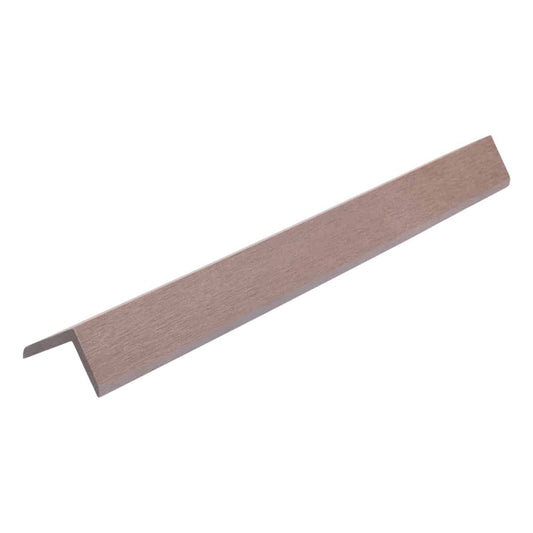
  • Edge trim / corner strips
  • Fibreglass wool or rock wool (for Class B)
  • Safety goggles & dust mask
Step-by-Step Installation

Follow these 9 steps for a clean, professional result on any standard interior wall.

STEP 1 Prepare

Gather all tools & materials

Lay out all tools and panels before starting. Confirm you have sufficient panels for your wall area — use our coverage calculator to check quantities.

STEP 2 Measure

Measure the wall height

Measure the full height of the wall from floor to ceiling at multiple points. Note any variation — walls are rarely perfectly even.

📐 Measure at least 3 points across the wall width
STEP 3 Cut

Cut panels to wall height

Using a circular saw or fine-tooth saw, cut panels to the measured height. Always cut on the back face to minimise surface chipping. Wear safety goggles.

✂️ Cut face-down for a cleaner finish
STEP 4 Fix First Panel

Place & fix the first panel

Begin at one end of the wall. Use a spirit level to ensure the first panel is perfectly plumb — this sets the alignment for all subsequent panels. Fix with screws at 600 mm intervals.

📏 Fix point spacing: 600 mm centre-to-centre
STEP 5 Continue

Install panels in sequence

Work along the wall fitting panels one at a time. After each panel, measure the remaining width to plan where the final cut panel will fall. Butt joints should be tight with no visible gaps.

STEP 6 Final Cut

Cut the final panel to width

Measure the remaining gap precisely and cut the last panel to the exact width required. A snug fit is essential — do not leave gaps at wall edges.

💡 Measure twice, cut once
STEP 7 Internal Corners

Finish internal corners

At internal corners, apply an edge strip. Glue the strip along the panel edge, press firmly, and hold in place until the adhesive sets.

🔧 Use a clamping block to hold strips while adhesive cures
STEP 8 External Corners

Finish external corners

External corners also require an edge trim strip. Apply adhesive, press the strip firmly over the corner joint, and allow to fully cure before applying any load.

STEP 9 Complete

Final inspection

Step back and inspect the full installation. Check all joints are flush, all edges are trimmed, and all fixings are secure. Allow any adhesive areas to cure fully before placing furniture nearby.

✅ Wipe down with a dry cloth to remove any dust
Fixing Methods & Absorption Class

Choose the fixing method that best suits your project. Each delivers a different level of acoustic performance.

A
Direct Nail Fix
Nail directly to wall

Nail or screw acoustic panels directly onto the wall surface. The simplest and most straightforward method, suitable for flat, solid walls. Screw at 600 mm intervals through the panel backing into wall plugs or timber studs.

ABSORPTION CLASS D
B
Adhesive Fix
Nail-free construction glue

Apply a high-strength nail-free construction adhesive in an S-pattern to the back of the panel. Press firmly against the wall and hold in place for the adhesive cure time specified by the manufacturer. Suitable for smooth, solid wall surfaces.

ABSORPTION CLASS D
C
Batten + Insulation
Best acoustic performance
BEST

Fix timber battens to the wall at 600 mm centres, then fit acoustic panels over the battens. Fill the cavity behind the panels with fibreglass wool or rock wool insulation before closing. This method delivers the highest sound absorption performance.

ABSORPTION CLASS B

Corner & Edge Finishing Guide

🔲 Internal Corners

Use an internal edge strip at all internal corner junctions. Apply adhesive to the back of the strip, press firmly against the panel edge at the corner, and hold with light clamping pressure or masking tape until fully cured. Do not apply stress to the join within the first 24 hours.

🔳 External Corners

External (protruding) corners require an external corner trim strip. Glue and press firmly as per internal corners. External corner strips also protect the panel edge from impact damage in high-traffic areas. Allow full adhesive cure time before finishing.

Key Specifications

Reference data for professional and DIY installers.

Screw / fixing spacing600 mm centres
Acclimatisation period24–48 hours minimum
Batten spacing (Method C)600 mm centres
Insulation type (Method C)Fibreglass wool or rock wool
Absorption Class — Methods A & BClass D
Absorption Class — Method CClass B
Corner / edge finishEdge strip with nail-free adhesive
Suitable surfacesFlat, dry, solid interior walls
💡

Pro Tips for Best Results

  • Always start from a plumb vertical line — never assume the wall corner is square.
  • For maximum acoustic performance, choose Method C (batten + rock wool).
  • When cutting panels, support the full length to prevent breakout at the cut edge.
  • If mixing panels from different packs, install boards alternating between packs to blend any natural batch variation evenly across the wall.
  • For large wall areas over 8 m in any direction, consult a professional installer regarding expansion allowances.

Need Help or Have a Question?

Our team is on hand to advise on quantities, fixing methods, or technical queries.