Swindon sits at the northern edge of the Wiltshire chalk downs, positioned between the Thames Valley to the north and the Marlborough Downs to the south. It is one of the fastest-growing towns in the South West of England, shaped by decades of planned expansion that has produced an unusually diverse mix of housing — from the Victorian railway workers' cottages of Old Town and the GWR Village conservation area to the sprawling modern estates of Kingshill, Walcot, and the newer developments around Wichelstowe and Tadpole Garden Village. That variety in housing stock translates directly into a wide range of paving requirements, and it is why Paving and Slabs Ltd stocks a product range broad enough to serve every type of project across the town.
Whether you are a homeowner in Wroughton looking to replace a tired concrete yard, a landlord managing rental properties across Park South, or a landscaping contractor working on a new-build estate in Blunsdon, we supply quality patio paving slabs with reliable delivery and expert guidance to help the job run smoothly from ground preparation through to finished surface.
Swindon's Climate and What It Means for Outdoor Paving
Swindon sits in a transitional climate zone — drier than the South West but wetter than much of the South East, with annual rainfall of around 700mm spread fairly evenly across the year. The town is sheltered from the worst of Atlantic weather by the hills to the west, but it is by no means dry. Autumn and winter bring consistent periods of damp, and ground frosts between November and March are a reliable occurrence across the chalk and clay soils that underlie much of Wiltshire.
Frost cycles are a genuine consideration when choosing paving materials here. Water that penetrates a porous slab will expand on freezing, causing surface spalling, micro-cracking, and joint failure over time. This is particularly relevant in exposed north-facing gardens, shaded areas where moisture lingers, and lower-lying plots on the clay-heavy ground common in parts of eastern Swindon around Stratton and Park North.
Summer in Swindon brings reasonable UV exposure and temperatures that can push into the low thirties during heatwaves — conditions which affect how certain materials age and whether jointing compounds remain stable over time. Choosing materials rated for both frost resistance and thermal stability gives the best long-term results in Swindon's moderately variable climate.
Ground Conditions and Drainage Across Swindon
Swindon's soil profile is one of its most defining features from an installation standpoint. The town sits at the junction of two very different geological zones. To the south and west, the Marlborough Downs bring chalk-based, free-draining ground that handles surface water relatively well. To the north and east, the land transitions into Oxford clay — a heavy, moisture-retentive soil that expands when wet, contracts when dry, and moves seasonally in ways that can compromise poorly prepared patio foundations.
In areas like Haydon Wick, Covingham, and Nythe — all sitting on or near Oxford clay — sub-base preparation is critical. A compacted MOT Type 1 sub-base of at least 100–150mm is strongly recommended before any paving is laid. Where ground movement has been observed in neighbouring properties, increasing sub-base depth to 200mm is not excessive. Cutting corners at foundation stage is the single most common cause of paving failure across clay-dominant ground, and it is far cheaper to get it right first time than to relay slabs within a few seasons.
In the chalk-influenced southern areas around Old Town, Wroughton, and Liddington, drainage is naturally sharper, though compaction of sub-base material remains important for stability. Our Drainage Guide covers the full range of drainage scenarios, including advice on permeable installations where surface water run-off is a concern. Our Size and Thickness Guide is also useful for matching slab dimensions and depth to your specific ground conditions and intended use.
Housing Stock in Swindon and Choosing the Right Paving Style
The GWR Village and Old Town conservation areas contain some of Swindon's most characterful Victorian and Edwardian terraces, where period-appropriate paving finishes make a real difference to kerb appeal and garden character. For these properties, natural stone options — particularly riven Indian sandstone in traditional buff, grey, or autumn tones — sit far more comfortably alongside original brickwork and period features than contemporary large-format porcelain.
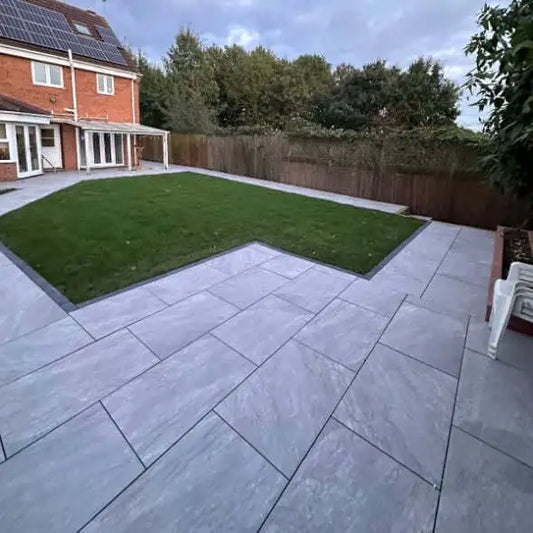
Across the vast post-war and modern estates that make up the majority of Swindon's residential footprint — Walcot, Penhill, Freshbrook, Park North, and the newer developments around Tadpole Garden Village and Wichelstowe — contemporary paving styles are increasingly the preference. Large-format porcelain slabs in stone-effect, concrete-effect, or subtle textured finishes are popular for outdoor entertaining areas that align with the cleaner architectural lines of more recent housing.
Swindon also has a high proportion of semi-detached homes and bungalows, particularly in Eldene, Nythe, and around the Dorcan area. Level garden plots are common here, which simplifies patio installation considerably and makes these properties ideal candidates for straightforward upgrades. Driveway improvements are a frequent request in these neighbourhoods too, where block-paved or concrete drives are commonly replaced with more attractive and durable surface options.
For design ideas suited to a range of property types and garden sizes, our guide on flagstone patio designs that transform outdoor spaces offers a useful visual starting point.
Product Ranges Available for Swindon
We stock three core ranges suitable for Swindon's climate and housing mix:
-
Patio Slabs — a versatile range spanning traditional concrete flags through to contemporary finishes, suited to most residential budgets and garden styles
-
Indian Sandstone — natural, warm-toned paving with genuine character; best sealed for use in frost-prone, wet conditions
-
Paving Slabs — our broadest category, covering a wide range of sizes, finishes, and price points for both domestic and commercial projects
If you are still deciding between material types, our roundup of the best paving slabs for patios and gardens in 2025 covers current styles, pricing tiers, and which materials are best suited to different conditions and uses.
Indian Sandstone in Swindon: Performance and Maintenance
Indian sandstone remains one of the most requested natural paving materials across Wiltshire, and with good reason. Its warm colour range, natural texture variation, and relatively accessible price point make it a strong choice for gardens where a natural aesthetic is the priority. In Swindon's climate, sandstone performs well when properly prepared and maintained — but the porosity of the material does require attention.
Sealing on installation is strongly recommended. An impregnating stone sealer applied before the patio is put into regular use will significantly reduce moisture absorption, algae establishment, and winter frost damage. Resealing every two to three years keeps the surface protected without heavy ongoing effort. Our guide to cleaning and sealing Indian sandstone sets out the full process clearly, and is well worth reading before installation begins.
For general upkeep of any paved surface, our article on cleaning and maintaining paving slabs covers pressure washing, moss removal, and re-jointing in practical detail.
Comparing Costs: Is Paving the Right Choice for Your Swindon Garden?
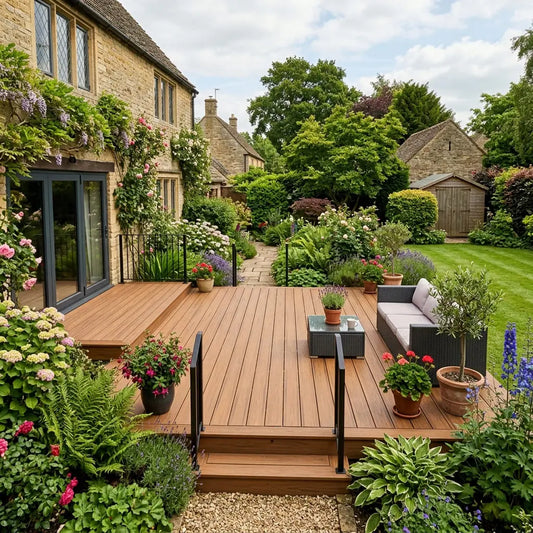
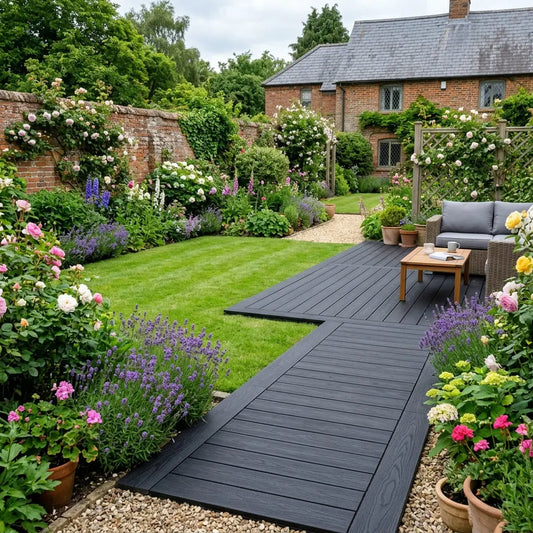
Paving slabs are not the only surface option available to Swindon homeowners, and for some projects an alternative may be more appropriate. Our detailed breakdown of paving slabs vs gravel vs decking compares real installation costs, longevity, and maintenance requirements across the most common surface types in the UK.
For those deciding between traditional patio slabs and individual block pavers or paver bricks, our guide on patio slabs vs paver slabs works through the practical differences in installation, cost, and long-term durability.
Delivery to Swindon and the Surrounding Area
We deliver paving orders to Swindon and across the surrounding area, including Chippenham, Marlborough, Royal Wootton Bassett, Highworth, Cricklade, and into parts of Oxfordshire and Gloucestershire. All paving is delivered on pallets via specialist freight courier. We ask that customers ensure clear vehicle access at the delivery address — this can be a consideration on some of the narrower residential streets in central Swindon and Old Town — and that someone is present to receive the delivery.
Porcelain ranges are generally held in stock for prompt despatch. Some natural stone ranges carry a short lead time depending on availability. If you are working to a specific installation date, contact us before placing your order and we will confirm current stock levels and estimated delivery windows for your postcode.
Related City Pages
Explore paving slabs for patios in Swansea.
Frequently Asked Questions
Do you deliver paving slabs to Swindon?
Yes, we deliver across Swindon and the surrounding Wiltshire area, including Chippenham, Royal Wootton Bassett, Marlborough, Highworth, and Cricklade. Orders are despatched on pallets via specialist freight courier. Please ensure vehicle access is clear at the delivery address and that someone is available to receive the consignment. Contact us before ordering if you are working to a tight project deadline.
What type of paving works best on Swindon's clay-heavy soils?
On clay-dominant ground — common across eastern and northern Swindon including Haydon Wick, Covingham, and Stratton — the priority is a well-compacted MOT Type 1 sub-base of 100–150mm before any paving is laid. Clay moves seasonally and any paving laid without adequate foundation will shift or crack over time. For the surface itself, both porcelain and Indian sandstone perform well provided the groundwork is correct.
Is Indian sandstone suitable for Swindon's winter frosts?
Yes, with the right preparation. Indian sandstone is a porous material, which means water can penetrate the surface and cause frost damage if left unsealed. Applying a quality impregnating sealer at installation and resealing every two to three years significantly reduces this risk. Properly sealed sandstone is a durable and attractive choice for Swindon gardens across all seasons.
What slab thickness is recommended for a patio in Swindon?
For standard residential garden patios, 20–22mm slabs are adequate when laid on a correctly prepared mortar bed and sub-base. For driveways, vehicle access areas, or heavier commercial use, a minimum of 30mm thickness is recommended. Our Size and Thickness Guide covers the full range of options and helps match slab dimensions to your specific project requirements.
Do Victorian properties in Old Town Swindon need a different paving approach?
The material choice benefits from more thought in period properties. Natural stone finishes — particularly riven Indian sandstone in traditional earthy or grey tones — complement the brickwork and character of Victorian and Edwardian homes far more sympathetically than large-format contemporary porcelain. Slab sizing also matters: smaller format slabs tend to look more proportionate in compact rear yards typical of terraced properties in the Old Town and GWR Village areas.
How important is drainage for a new patio in Swindon?
Very important, particularly on clay-heavy ground where natural drainage is poor. Surface water that cannot escape will pool, accelerate algae growth, and eventually undermine jointing compounds and the mortar bed beneath. A slight fall away from the house — typically 1:80 — should be built into the installation, and where garden levels slope towards the property, additional drainage channels may be required. Our Drainage Guide covers all the key considerations in full.
Can I use large-format porcelain slabs in a new-build Swindon garden?
Absolutely. Large-format porcelain in 600x900mm or 600x1200mm sizes is well suited to the wider garden plots typical of newer estates around Tadpole Garden Village, Wichelstowe, and Kingshill. Porcelain's frost resistance, low maintenance requirements, and contemporary finish make it a particularly practical choice for Swindon's climate. The key installation requirement is a full mortar bed — porcelain must not be spot-bedded, as hollow spots beneath the slab can cause cracking under foot traffic.