Middlesbrough sits at the heart of the Tees Valley, a region shaped by its industrial heritage, dense residential streets, and a growing appetite for high-quality outdoor living spaces. From the Victorian terraces of Linthorpe and Gresham to the newer housing developments around Coulby Newham and Marton, homeowners and commercial property managers across Middlesbrough are increasingly turning to premium paving solutions to transform underused outdoor spaces into durable, attractive extensions of their homes.
At Paving and Slabs Ltd, we supply a carefully curated range of patio paving slabs suited to the specific demands of North East England — designed to withstand the region's wet winters, occasional frost, and the kind of everyday wear that Teesside weather demands.
Why Middlesbrough Homeowners Choose Paving and Slabs Ltd
Choosing a paving supplier isn't just about price per square metre. It's about finding a company that understands local conditions, delivers reliably, and backs its products with genuine expertise. We've supplied paving to customers across Middlesbrough, Stockton-on-Tees, Redcar, and throughout the wider Tees Valley — and we know that what works for a garden in the South West doesn't always translate to the North East.
Our product range is stocked with materials that have been selected for durability in colder, wetter climates. Whether you're a homeowner refreshing a tired back garden, a landlord upgrading rental property kerb appeal, or a landscaper working on a commercial contract in the town centre, we offer consistent quality, competitive trade pricing, and national delivery.
We also provide a full Installation Guide and Maintenance Guide to help customers get the best long-term results from their paving investment.
Middlesbrough's Climate and What It Means for Paving
Middlesbrough receives around 640mm of rainfall per year — above the UK average — with wet conditions spread fairly evenly across all seasons. The town sits inland from the North Sea coast, meaning it avoids some of the harshest coastal salt exposure seen in Redcar or Saltburn, but the prevailing north-easterly winds still bring biting cold through the winter months.
Frost cycles between November and March are a consistent concern. Paving materials that absorb water and then freeze can crack or spall over time, which is why frost-resistant options are strongly recommended for any outdoor installation in this part of Yorkshire and the Tees Valley. Ground-level temperature drops are more frequent here than in the Midlands or South, making material selection genuinely important rather than a marketing afterthought.
For patios and paths in Middlesbrough, we recommend:
-
Porcelain Paving — near-zero water absorption, fully frost-resistant, and extremely low maintenance in wet conditions
-
Indian Sandstone — a popular natural stone option that performs well when properly sealed against moisture and algae
-
Patio Slabs — a versatile range suited to a variety of budgets and garden styles
If you're unsure which material suits your project, our blog on the best paving slabs for patios and gardens in 2025 is a helpful starting point.
Soil and Ground Conditions Across Middlesbrough
Understanding what lies beneath your patio is just as important as choosing the right surface material. Middlesbrough sits on a mix of clay-heavy soils and made ground — a legacy of its industrial and urban development history. Clay soil expands when wet and contracts during dry spells, which creates movement that can undermine a poorly prepared sub-base.
In areas like Hemlington, Thornaby, and Acklam, clay-dominant ground conditions mean that drainage and sub-base preparation are critical. A compacted MOT Type 1 sub-base of at least 100–150mm is typically recommended before any paving is laid. Without it, slabs can shift, crack, or develop drainage pooling within just a few seasons.
In newer development zones around Coulby Newham and Ingleby Barwick — which sit on the southern fringes of Middlesbrough — soil profiles can vary, and in some cases fill or made ground may require additional assessment before laying large patio areas. If you're working with a landscaper, ensure they've carried out a proper ground assessment before pricing your sub-base depth.
Our Installation Guide covers sub-base preparation in detail and is worth reading before any project begins.
Property Types in Middlesbrough and Suitable Paving Styles
Middlesbrough's housing stock is diverse. The town centre and inner residential areas — particularly Linthorpe, Gresham, and parts of North Ormesby — feature a high density of Victorian and Edwardian terraces, many with modest rear yards that lend themselves to low-maintenance paved spaces rather than lawn. For these properties, smaller-format paving slabs in a traditional or natural stone finish tend to complement the period character of the homes without looking incongruous.
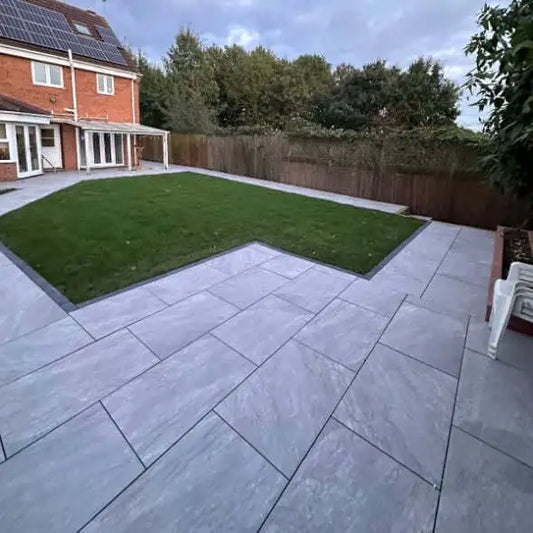
Moving outward to the suburbs of Marton, Nunthorpe, and Stainton, you'll find larger detached and semi-detached homes built from the 1960s onwards, typically with generous rear gardens. Here, larger-format porcelain slabs in contemporary finishes — concrete-effect, stone-effect, or subtle textured designs — are increasingly popular for outdoor entertaining areas and garden overhauls.
Bungalows remain common across parts of Acklam and Coulby Newham, where level garden spaces make patio installation relatively straightforward and driveway upgrades are a frequent request. Rental properties across the town also represent a significant portion of our customer base — landlords looking for durable, low-maintenance surface solutions that stand up to tenant use without requiring frequent upkeep.
For design inspiration, our guide on the best flagstone patio designs that transform outdoor spaces showcases a range of styles suited to different property types.
Porcelain vs Indian Sandstone: What's Right for Middlesbrough?
This is one of the most common questions we receive from customers in the North East, and the honest answer depends on your priorities.
Porcelain paving is the leading choice for low-maintenance performance in high-rainfall areas. Its near-zero porosity means water doesn't penetrate the surface, dramatically reducing the risk of frost damage, algae growth, and staining. In a climate like Middlesbrough's, this translates to fewer cleaning hours and a longer-lasting finish. The trade-off is a higher upfront cost and a need for careful installation — porcelain must be laid on a full mortar bed with suitable adhesive to prevent hollow spots.
Indian sandstone, by contrast, offers a warmth and natural variation that many homeowners prefer aesthetically. It is more porous than porcelain, which means sealing is strongly advised in the North East's wet climate. When properly sealed and maintained, sandstone patios can last for decades and develop a beautiful patina. Our guide on how to clean and seal Indian sandstone covers the process in full.
For a broader cost comparison across surface types, our article on paving slabs vs gravel vs decking sets out the real-world costs over time.
Slab Thickness and Installation Advice for Middlesbrough Gardens
For standard residential patio use, a slab thickness of 20–22mm is generally adequate when laid on a properly prepared mortar bed. However, for driveways, areas subject to vehicle access, or commercial applications, a minimum of 30mm is recommended to prevent cracking under load.
Given the clay-heavy ground conditions across much of Middlesbrough, we'd always advise investing properly in the sub-base rather than cutting corners to reduce cost. A well-built 150mm compacted sub-base with sharp sand bedding will protect your paving far longer than any surface upgrade alone.
If you're comparing paving slabs with paver bricks or block paving for your project, our guide on patio slabs vs paver slabs walks through the practical differences.
For ongoing upkeep once your patio is installed, our guide to cleaning and maintaining paving slabs covers everything from pressure washing to re-jointing.
Delivery to Middlesbrough and the Tees Valley
We deliver paving slabs to Middlesbrough and throughout the surrounding Tees Valley area, including Stockton-on-Tees, Redcar, Hartlepool, Billingham, and Guisborough. Paving orders are delivered on pallets via a specialist courier network. We recommend ensuring clear vehicle access to your delivery point and that someone is available to receive goods on the agreed day, as paving pallets cannot typically be left unattended.
Lead times vary by product range and season — porcelain ranges are generally stocked for quicker despatch, while some natural stone ranges may require a short lead time. Contact us before ordering if you're working to a specific project deadline and we'll confirm availability and estimated delivery windows for your area.
Related City Pages
Explore paving slabs for patios in Mansfield.
Frequently Asked Questions
Do you deliver paving slabs to Middlesbrough?
Yes, we deliver across Middlesbrough and the wider Tees Valley, including Stockton-on-Tees, Redcar, Billingham, and Hartlepool. Orders are despatched on pallets via a specialist delivery network. Please ensure you have suitable vehicle access at your property and someone available to receive the delivery. Contact us in advance if you have access restrictions or a tight project timeline.
Which paving material is best suited to Middlesbrough's wet climate?
Porcelain paving is the top recommendation for Middlesbrough given the region's above-average rainfall and regular winter frost cycles. Its near-zero water absorption prevents moisture from penetrating the surface, dramatically reducing the risk of frost damage and algae growth. Indian sandstone is also a strong option but must be properly sealed to perform well in North East weather conditions.
What thickness of paving slab should I use for a garden patio in Middlesbrough?
For standard residential patios and garden paths, 20–22mm slabs laid on a full mortar bed are generally sufficient. For driveways, areas with regular vehicle access, or commercial installations, we recommend a minimum of 30mm thickness to prevent cracking under load. Always pair slab thickness with a properly compacted sub-base for the best long-term results.
Is sub-base preparation particularly important in Middlesbrough?
Yes. Much of Middlesbrough sits on clay-heavy ground, which expands and contracts seasonally. Without a solid sub-base — typically 100–150mm of compacted MOT Type 1 hardcore — paving slabs can shift, crack, or develop drainage issues within a few years. Proper ground preparation is one of the most important investments you can make in any paving project in this region.
Can I use Indian sandstone for a patio in Middlesbrough, or is it too wet here?
Indian sandstone can perform excellently in Middlesbrough when correctly installed and sealed. Because sandstone is a porous natural material, sealing is essential in high-rainfall areas to prevent moisture absorption, algae growth, and eventual frost damage. We recommend applying a quality impregnating sealer on installation and resealing every two to three years. Our guide on cleaning and sealing Indian sandstone covers the process in full.
What paving styles suit Victorian terraces and period properties in Middlesbrough?
For Victorian terraces common in areas like Linthorpe and Gresham, natural stone finishes — particularly riven Indian sandstone in traditional buff, silver, or autumn brown tones — tend to complement period architecture far better than ultra-contemporary porcelain. Smaller-format slabs also work well in compact rear yards typical of terrace properties, creating a proportionate, considered finish without overwhelming the space.
How do I maintain paving slabs once they're installed?
Regular sweeping, annual pressure washing, and prompt attention to moss or algae growth will keep paving in good condition for many years. For porcelain, a simple wash is usually sufficient. For natural stone, periodic resealing is recommended. Jointing compound should be inspected annually and replaced if cracking or erosion is visible. Our full maintenance guide covers all surface types and seasonal upkeep tips.