Cullercoats is a small coastal village on the North Tyneside coast, sitting on the North Sea between Whitley Bay to the north and Tynemouth to the south. Once a working fishing community, it has evolved into a well-regarded residential area known for its Victorian bay-fronted houses, its sandy bay and its close-knit character within the wider Tyneside conurbation. The combination of period housing stock, generous rear gardens on many properties and a genuine appetite for outdoor improvement makes Cullercoats and the surrounding North Tyneside coast a consistent market for quality natural stone paving. Paving and Slabs Ltd supplies Indian sandstone in Cullercoats to homeowners, landscapers and contractors across the NE30 postcode area and the wider North Tyneside coast who want a material that holds up to one of the UK's more demanding coastal environments.
Indian sandstone brings natural warmth and character to garden spaces in a way that concrete cannot replicate, and in a location defined by the North Sea, weathered stonework and the distinctive Victorian architecture of the Tyneside coast, a well-specified natural stone patio or pathway integrates into its surroundings in a way that manufactured alternatives rarely achieve.
Indian Sandstone and Cullercoats' Coastal Character
Cullercoats is defined architecturally by its Victorian bay-fronted terraces and the solid stone-built properties that line the streets above the bay. These homes sit within modest but well-tended gardens, many with rear patio areas that benefit considerably from an upgrade in surface quality. Indian sandstone in buff or silver grey tones sits naturally alongside the sandstone and brick of the original building fabric, and the riven surface texture provides the grip that is genuinely necessary on surfaces that are exposed to coastal moisture, sea spray and winter frost.
The streets immediately above the bay — Marine Avenue, Beverley Terrace and the properties backing onto the clifftop — have the most direct coastal exposure in the village and present the most demanding environment for any outdoor surface material. Further inland through the residential streets of Cullercoats and into the wider North Tyneside areas of Monkseaton and Whitley Bay, the exposure reduces somewhat but the combination of North Sea climate, high rainfall and cold winters remains a significant factor for any paving specification.
Larger detached and semi-detached properties in Monkseaton and the residential streets back from the coast have more generous gardens where ambitious patio and landscaping projects are common. Our article on flagstone patio designs that transform outdoor spaces covers the range of approaches that work well across different property types and garden scales in coastal northeast settings.
North Sea Climate and What It Demands of Indian Sandstone
The North Tyneside coast is one of the more environmentally demanding locations in England for outdoor paving. Cullercoats faces directly onto the North Sea, and the easterly winds that track in off the water — particularly in winter and early spring — are cold, moisture-laden and salt-bearing. Annual rainfall in this part of Tyne and Wear sits at around 650mm, but the figures alone do not capture the frequency of grey, damp days that characterise a Tyneside coastal winter, when surfaces can remain wet for weeks at a time.
Ground frost occurs regularly from October through to April, and the combination of persistent coastal damp and repeated freeze-thaw cycling is particularly damaging to porous or poorly sealed paving materials. Water that penetrates a stone surface expands as it freezes and contracts as it thaws, and over successive northeastern winters this process progressively degrades slabs and mortar joints that are not properly specified and protected. Indian sandstone's natural density makes it well suited to these conditions, but sealing after installation is not an optional extra in Cullercoats — it is a practical necessity that determines whether the stone performs for twenty years or begins to show stress within five.
Salt air is the additional variable that distinguishes Cullercoats from inland northeast locations like Durham or Gateshead. Properties on the seafront, along the clifftop and on the streets directly above the bay experience salt deposition on outdoor surfaces throughout the year. Salt accelerates the breakdown of porous stone surfaces, attacks mortar joints and promotes the biological growth that makes surfaces unsafe underfoot. Using a polymer-modified mortar for both the bedding course and pointing, combined with regular sealing, provides the best long-term protection for Indian sandstone installations in this coastal setting. Our guide on how to clean and seal Indian sandstone covers the full sealing process and is essential reading for any coastal northeast installation.
Ground Conditions and Sub-Base Requirements Around Cullercoats
The geology beneath Cullercoats and the North Tyneside coast is predominantly Carboniferous sandstone and shale, overlain in many areas by glacial till deposits left by the last ice age. The glacial till tends towards a clay-bearing character in the lower-lying areas between the coast and the inland residential streets, with variable drainage quality depending on the precise composition of the deposit.
Coastal erosion and the proximity to the sea mean that some properties on the clifftop and immediately above the bay sit on ground that requires additional care during sub-base preparation. On these sites, confirming ground stability before laying any paving is sensible practice, particularly where previous ground works or natural weathering of the sandstone cliffs may have affected the integrity of the sub-surface.
Across the wider residential areas of Cullercoats and Monkseaton, a compacted MOT Type 1 hardcore sub-base of at least 100mm is the standard minimum for Indian sandstone installation, increasing to 150mm on the more clay-bearing glacial till soils where drainage is poorer and seasonal ground movement is a consideration. Incorporating adequate fall gradients from the outset — a minimum of 1:60 away from house walls — is essential given the volume of moisture these surfaces receive. Our Installation Guide covers sub-base preparation and drainage specification in full, and the Thickness Guide confirms the correct slab depth for different uses and load requirements.
Property Types and Outdoor Projects Across Cullercoats and North Tyneside
Cullercoats itself is characterised by its Victorian and Edwardian housing, and the compact rear gardens and modest front spaces that come with these properties are where the majority of local paving projects begin. Patio replacement, path renewal and front garden surfacing are the most common project types, and Indian sandstone in a well-chosen tone and riven finish provides a step up in quality and appearance that these properties respond to well.
Whitley Bay to the north has a broader mix of housing, including interwar semis and bungalows with more conventional rear gardens where new patio installations and outdoor seating area extensions are common. The bungalow stock in particular — prevalent in parts of Monkseaton and Whitley Bay — tends to have gardens that wrap around more than one elevation, creating opportunities for a cohesive natural stone scheme used consistently across multiple aspects of the property.
Tynemouth to the south, with its larger Victorian properties and more affluent residential character, represents the premium end of the local garden paving market. Landscaping projects in Tynemouth are frequently more ambitious in scope and specification, and landscape contractors working across the NE30 postcode area regularly source natural stone through us for these projects. Rental properties across the area also generate consistent demand for practical, presentable paving that reduces ongoing maintenance between tenancies.
For homeowners working through a material decision before committing, our comparison of patio slabs versus paver slabs is a useful starting point, and our 2025 paving slabs guide covers the full range of available materials in practical terms.
Indian Sandstone vs Other Surfaces for Cullercoats Gardens
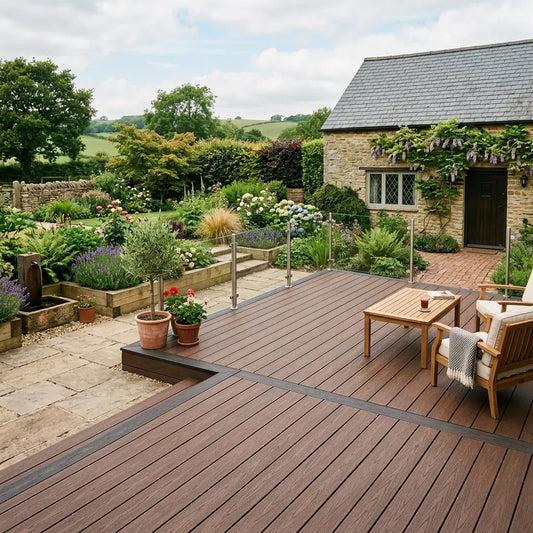
Timber decking is a frequent alternative consideration for North Tyneside garden projects, but it performs particularly poorly in the coastal northeast environment. Salt air, persistent damp and cold winters combine to cause surface degradation, board warping and heavy moss growth within three to five years in direct coastal settings like Cullercoats, and the ongoing maintenance obligation is substantially higher than for sealed Indian sandstone. Our composite decking versus patio slabs comparison examines whether composite materials improve this picture in a northeast coastal context, and our breakdown of paving slabs versus gravel and decking provides an honest long-term cost comparison across surface types. The Maintenance Guide and UK Guidelines are both worth reviewing before installation work begins.
Delivery to Cullercoats and the North Tyneside Coast
We deliver Indian sandstone to addresses across Cullercoats and the wider North Tyneside area, including Whitley Bay, Monkseaton, Tynemouth, Preston Grange, Seaton Delaval and the surrounding NE25, NE26, NE29 and NE30 postcode areas. Deliveries are made on pallets via trusted UK logistics partners. Please confirm kerbside access for a delivery vehicle at your address before ordering. The older terraced streets of Cullercoats and some of the clifftop properties above the bay have limited access for larger vehicles, and identifying any restrictions in advance ensures a smooth delivery.
Related City Pages
Dagenham, Darlington, Dartford, Daventry
All Indian Sandstone Locations
Frequently Asked Questions
Do you deliver Indian sandstone to Cullercoats?
Yes. We deliver Indian sandstone across Cullercoats and the wider North Tyneside area, including Whitley Bay, Monkseaton, Tynemouth, Preston Grange and Seaton Delaval. All deliveries are made on pallets via trusted UK logistics partners. Please confirm kerbside access at your address before ordering, as the older terraced streets of Cullercoats and properties on the clifftop above the bay have limited access for larger delivery vehicles.
Is Indian sandstone suitable for Cullercoats' North Sea coastal climate?
Yes, when correctly specified and sealed. Cullercoats faces directly onto the North Sea and experiences easterly winds, persistent coastal damp, salt air and regular frost between October and April. Indian sandstone's natural density makes it well suited to these conditions, but sealing after installation is a practical necessity rather than an optional extra in this environment. A polymer-modified mortar for bedding and pointing provides additional protection against salt ingress and joint degradation on exposed coastal sites.
How does North Sea salt air affect Indian sandstone in Cullercoats?
Properties on the seafront, clifftop and streets directly above Cullercoats Bay experience salt deposition on outdoor surfaces throughout the year, not just during storms. Salt accelerates surface wear on porous stone, attacks mortar joints and encourages biological growth that makes surfaces slippery underfoot. Sealing with an appropriate impregnating sealer and using polymer-modified mortar significantly reduces these effects. Our guide on how to clean and seal Indian sandstone covers the full process.
What sub-base is needed for Indian sandstone in Cullercoats?
A compacted MOT Type 1 hardcore sub-base of at least 100mm is the standard minimum across the Cullercoats and Monkseaton area. On the clay-bearing glacial till soils in the lower-lying residential areas, 150mm is advisable. On clifftop and coastal fringe properties, confirming ground stability before laying any paving is sensible given the proximity to coastal erosion. Fall gradients of at least 1:60 away from house walls should be incorporated from the outset. Our Installation Guide covers sub-base and drainage specification in full.
Which Indian sandstone finish is best for a Cullercoats garden?
Riven finish slabs are the right choice for the overwhelming majority of Cullercoats and North Tyneside coastal garden projects. The naturally textured surface provides the grip necessary on surfaces that are damp for much of the year and subject to frost and sea spray through winter. Smooth or sawn finishes are not recommended for exposed outdoor areas in this coastal environment and should be reserved for sheltered covered spaces with fully controlled drainage.
Is Indian sandstone better than decking for a garden in Cullercoats?
Yes, significantly so in a coastal northeast setting. Salt air, persistent damp and the cold winters of the North Tyneside coast cause timber decking to degrade, warp and accumulate heavy moss growth within three to five years of installation. Composite decking performs better but still suffers in sustained coastal exposure. Properly sealed Indian sandstone on a well-prepared sub-base will outlast either option by many years with considerably less ongoing maintenance.
How do I maintain Indian sandstone on the Cullercoats coast through the year?
Clear salt residue, leaf debris and organic matter from the surface regularly, particularly after storms and through the autumn and winter months when biological growth establishes quickly in the coastal damp. Carry out an annual clean with a pressure washer or stiff brush and a proprietary stone cleaner. Inspect and repoint any failed mortar joints before winter to prevent salt and moisture ingress. Reseal the stone every two to three years to maintain its resistance to moisture, salt and biological staining. Our maintenance guide covers the full seasonal care routine.